
Why structure matters before speed in internal training

This article looks at why structure matters before speed in internal training from a practical training point of view. It is written for readers who care about internal martial arts and related terms like internal martial arts, bagua zhang, xing yi, yi quan, whole body power but do not want empty slogans or complicated language. The goal is to give you something useful enough to take into your next practice session. I focus on body position, timing, patience, and the small habits that make training feel more honest. Some parts are factual training advice, some parts are recommendations, and some parts are personal opinion based on what tends to help regular students stay consistent. If you are exploring Chen style tai chi and practical martial arts, this piece gives you a grounded way to think about progress without pretending there is one magic method. You will find simple ways to test balance, reduce wasted tension, and make each repetition more useful. The advice is meant for real practice, not perfect conditions, so it stays close to what a student can actually feel on the floor.
0 Comments

How a Taoism Practices

I perform this practice once upon waking and once before sleeping. If time allows, I also do it in the afternoon. The duration is flexible. I approach the practice slowly and naturally, without focusing on appearances or controlling my breathing. I close my mouth slightly with my teeth lightly touching and my tongue resting against the roof of my mouth. I sit straight with an erect spine, relaxed shoulders, and a contained chest. My eyes are nearly closed (as if lowering a curtain). I place both hands lightly on my lower Dantian in the Taiji symbol posture. Either crossed-legged or in a natural sitting position is acceptable. I breathe out turbid air from my mouth and then slowly inhale fresh air through my nose, replenishing the air expelled from my Dantian. I exhale quickly and inhale slowly, fully exhaling and inhaling. I repeat this breathing three times to expel all turbid air from my abdomen, then settle my mind, putting all thoughts aside. I redirect my vision and hearing inward, concentrating the essence in my kidneys, guarding my eyes, the soul in my liver, guarding my mouth, the spirit in my heart, guarding my nose, and the thoughts in my spleen, with concentrated intent.

0 Comments

Mr. Wei Qinwen’s Biography

    Mr. Wei was originally from Funing County, Hebei Province but was born in Shenyang and taught martial arts at the Jilin Institute of Technology until his retirement. His father was a wealthy businessman who ran a restaurant, and Mr. Wei, out of necessity, began apprenticing at the restaurant after finishing elementary school. Despite the daily toil, he continued to self-study diligently, seeking advice from the restaurant's patrons whenever he encountered difficulties. Thanks to his hard work and extraordinary intelligence, he made significant progress in his studies, laying a solid foundation for his future work and teaching. In his youth, Mr. Wei was frail and often ill, but was fortunate to be taken as a nominal disciple by Mr. Li Wenbiao, a renowned third-generation Baguazhang master and president of the Shenyang Martial Arts Association, who taught him Baguazhang.

0 Comments

Mr. Guo Gumin’s Biography

         Guo Gumin, originally named Decang, was born on September 20th of the 13th year of the Guangxu Emperor (1887) and passed away on August 25th, 1968. His ancestral home was Guojiazhuang, twenty miles south of Yi County, Hebei Province. In his youth, he left home for Beijing to apprentice at an old clothing business. During his apprenticeship, through an introduction, he met the second-generation master of Baguazhang and founder of Liang style Baguazhang, "Clothing Liang" Liang Gongzhen, and thus began his training in Baguazhang under him.

0 Comments

Baguazhang Q&A: Grandmasters on Circle Walking, Palms & Principles

 Traditional Baguazhang song formulas attributed to Dong Haichuan repeatedly emphasize that the feet must keep changing and that standing still makes the practitioner vulnerable. Different lineages preserve slightly different wording, but the message is remarkably consistent: Bagua should remain mobile.  I think this is one reason beginners sometimes misunderstand circle walking. They believe walking is merely the warm-up before learning the “real techniques.” In traditional Bagua, the walking itself is one of the real techniques because it changes how the rest of the body learns to function.  When I first spent more time around Baguazhang practitioners, I noticed that very experienced people could make the walking look almost boring. There was no dramatic bouncing or athletic display. Yet the feet kept placing the body at useful angles, and the upper body stayed organized while the direction changed underneath it. That kind of boring-looking skill usually takes a long time.

0 Comments

Master Che Runtian, a Distinguished Practitioner of Song Style Xingyi Quan, Discusses the Realization of Releasing Internal Power

Master Che Runtian, a distinguished practitioner of Xingyi Quan, possessed exceptionally high internal strength. He often shared insights on how to unleash internal power, based on his experiences annotated in the "Internal Power Classic" during his lifetime. His understanding is organized as follows: The release of internal power is a comprehensive manifestation of the unity between mind and intention, intention and energy, energy and strength, shoulders and hips, elbows and knees, hands and feet – both internally and externally. The foundation, particularly the lower body, is crucial. The capability of the Six Harmonies requires persistent and rigorous practice and insight.

0 Comments
Read more about the article How Xingyi Quan Can Be Extremely Lethal Within a Year ?
Xing yi quan

How Xingyi Quan Can Be Extremely Lethal Within a Year ?

Xingyi Quan is a form of boxing known for its strong combat effectiveness. It is widely acknowledged for its simplicity and quick mastery; some may develop considerable fighting ability within a year, while others might achieve it in just a few months. However, many Xingyi Quan enthusiasts today possess minimal combat skills, and there have been instances where individuals practicing for years have been severely beaten in street fights. Why hasn't the effectiveness of "being able to fight within a year" been demonstrated in these cases?

0 Comments

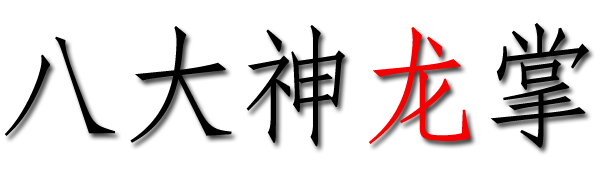
Taoist Kunlun Antarctic Gate Secret Technique – Eight Great Divine Dragon Palms.

The Eight Great Divine Dragon Palms are an entry-level technique of the Daoist Kunlun School's Antarctic Gate, a blend of soft body techniques and hard qi gong. This method was passed down by Mr. Lu Wenrui, the former director of the Shandong Provincial Martial Arts Hall, and further perfected by the renowned practitioner Fang Zhen. This technique integrates the essence of health preservation, martial arts, and self-defense from ancient and modern sources, guided by classical Chinese medical theory, aimed at strengthening the mind and body, enhancing power through mental focus, and promoting overall well-being. The Eight Great Divine Dragon Palms represent a robust qigong practice within the Daoist Kunlun School's Antarctic Gate, serving as the foundation for internal energy cultivation and striking techniques. During practice, each palm technique manifests different mental intentions, resulting in different effects. This technique emphasizes…

0 Comments