Understand the Martial Art Terminology

What is Wushu? The term "Wushu" (武术; Wǔshù) is derived from two Chinese characters: "Wu" (武), meaning "Martial," and "Shu" (术), meaning "Art" or "Skill sets." Therefore, Wushu directly translates to "Martial Arts." Wushu encompasses a wide range of Chinese martial arts and is a standardized form of practice known for its fluid movements and acrobatic techniques. An example of Wushu in action would be a Canadian Wushu Team competing in the long spear discipline at an international competition, showcasing the art form's technical skills and athletic prowess.

0 Comments
Read more about the article Does Tai Chi Work in a Fight? What Real Martial Training Requires
tai chi Logo

Does Tai Chi Work in a Fight? What Real Martial Training Requires

   Yes, Tai Chi can be trained as a martial art, but simply practicing slow forms does not automatically make someone able to fight. If a practitioner wants real self-defense ability, the training has to include partner work, applications, timing, distance, balance, conditioning, and eventually some form of realistic resistance.  This is where the question becomes more complicated than a simple yes or no. Today, many people practice Tai Chi mainly for health, mobility, balance, relaxation, or enjoyment. There is nothing wrong with that. But health-oriented Tai Chi and martial training do not have exactly the same goals, even when they use the same form.  After spending most of my life around traditional Chinese martial arts, I have seen this difference many times. A person can perform a beautiful slow form and still have very little understanding of distance, timing, contact, or what happens when another person does not cooperate. On the other hand, someone who trains the form together with push hands, applications, partner drills, and resistance starts developing a very different skill set.

0 Comments
Read more about the article Practicing Tai Chi Must Understanding The Principles  – Ma Hong
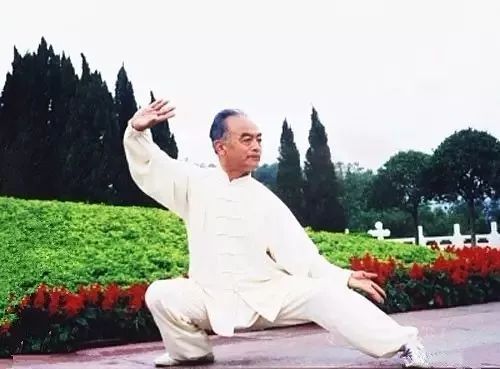
Master ma Hong

Practicing Tai Chi Must Understanding The Principles – Ma Hong

In 1999, it was the 151st birth anniversary (1849-1929) of Grandmaster Chen Xin, the first-generation successor of Chen-style Tai Chi. Chen Xin was an outstanding Tai Chi theorist who comprehensively summarized and systematically expounded the principles and techniques of Chen-style Tai Chi, accumulated over nearly five centuries. His monumental work, "Illustrated Explanation of Chen-style Tai Chi Chuan," is the first and most comprehensive masterpiece of Tai Chi Chuan in China's history, shining with brilliance to this day. It still holds immense value in promoting and developing Tai Chi Chuan, particularly in terms of theory. Chen Xin once said, "To learn Tai Chi Chuan, one must first study books. By understanding the principles, learning the forms becomes natural. A diligent learner must prioritize the principles." He also cautioned against disregarding the study of theoretical principles, warning against falling into arrogance…

0 Comments
Read more about the article Wu wenhao – To cultivate oneself, one must first rectify the mind
tai chi Logo

Wu wenhao – To cultivate oneself, one must first rectify the mind

To practice Tai Chi Chuan, it is essential to understand its characteristics. Tai Chi Chuan first involves physical movements, which refer to its external form. Secondly, it encompasses internal aspects such as spirit, intention, and energy. Tai Chi Chuan integrates the external form with the internal spirit, intention, and energy, making them interdependent and forming a unified martial art. Therefore, whether practicing Tai Chi Chuan for fitness or combat purposes, both aspects cannot be disregarded. According to Wang Zongyue's "Thirteen Dynamics Song of Practice," it states, "The ultimate purpose of understanding intent is to prolong life and remain forever youthful." This indicates that the highest level of practicing Tai Chi Chuan is to promote longevity. This change in the purpose of practicing Tai Chi Chuan has emerged due to the changing times. In modern times, the emphasis of practicing…

0 Comments
Read more about the article Wu Wenhao: Three Aspects of the Definition of Tai Chi Chuan
tai chi Logo

Wu Wenhao: Three Aspects of the Definition of Tai Chi Chuan

Regarding the definition of Tai Chi Chuan, it has always been a controversial issue. Most people believe that Tai Chi Chuan is related to the philosophy of the Book of Changes (Zhouyi), emphasizing Tai Chi, Yin and Yang, Eight Trigrams, and Five Elements, hence the name Tai Chi Chuan. However, this statement is not entirely accurate. The theories of Tai Chi, Yin and Yang, Eight Trigrams, and Five Elements are macroscopic guiding principles of Chinese culture, serving as a philosophical foundation that influences various aspects of traditional Chinese culture, including military strategy, traditional medicine, and many martial arts styles. Therefore, the explanation that Tai Chi Chuan is named after the Tai Chi theory is not appropriate. So, what is Tai Chi Chuan? I believe its definition encompasses three aspects. The first aspect is its basic principles. The name "Tai…

0 Comments
Read more about the article The Nine Essentials (九要论)  1-4
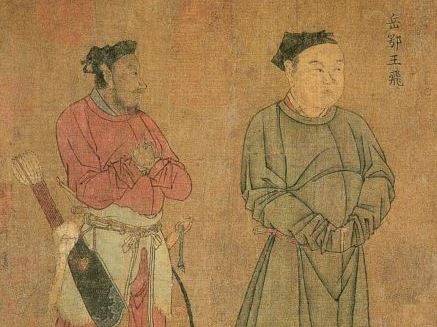
General Yue Fei

The Nine Essentials (九要论) 1-4

The Nine Essentials (九要论) The martial arts classic created by General Yue Fei during the Southern Song Dynasty in between 1103-1142.  "The Nine Essentials" is a martial arts classic that not only summarizes the general principles of martial arts from a theoretical perspective but also presents a comprehensive and eloquent system. It not only guides the practice of martial arts in general but also provides an avenue for artistic enjoyment. "The Nine Essentials" consists of nine sections that have a perfect internal numerical and logical structure. The content includes: One Unity, Two Qi, Three Joints, Four Extremities, Five Elements, Six Harmonies, Seven Advances, Eight Body Movent, and Nine Steps. The First Principle In all things, there is a unity amidst diversity, and in every division, there is a harmony. Therefore, in the vast expanse of the world, from all…

0 Comments

Understand Why Tai Chi is an Effective Fitness Practice ?

The fitness benefits of Tai Chi have been extensively validated through long-term and extensive practical experience, as well as research conducted by sports practitioners, medical professionals, and scientists. It has been substantiated from various aspects including traditional health preservation, traditional Chinese medicine, and modern medicine. Some of the key principles are as follows: Scientific breathing technique: Tai Chi emphasizes abdominal breathing, whether it is natural breathing or coordinated breathing with movements. The emphasis is on abdominal breathing, which is combined with intentions. During inhalation, internal energy rises along the spine meridian, and during exhalation, it sinks along the front chest meridian, while the lower abdomen concaves during inhalation and protrudes during exhalation. This type of breathing exercise expands lung capacity. Scientific experiments have shown that lung capacity is directly proportional to strength and life expectancy. For instance, during sleep,…

0 Comments

Master Wang Xian’s Tai Chi Quan Q&A. – 3

What should I pay attention to when practicing Tai Chi if I have practiced other styles of martial arts before? First, you need to identify the differences between Tai Chi and the martial arts styles you previously practiced. It is crucial to understand these differences before practicing Tai Chi to avoid unconsciously incorporating the feelings and habits from your previous styles into Tai Chi. Once you have identified the differences, especially the main ones, you can consciously avoid mixing them. For a considerable period of time when starting to learn Tai Chi, it is recommended not to simultaneously practice the styles you previously learned. Otherwise, you may unintentionally bring elements of your previous styles into Tai Chi. In Chinese martial arts, the distinction in "jin" (power, force) between different styles is a significant dividing line, so it is particularly…

0 Comments