Tai Chi Before or After Eating? My Food, Water and Morning Practice Routine
If you ask me whether it is better to practice Tai Chi before or after eating, my answer is simple: I don’t like practicing when I am either very hungry or very full. For morning practice, I usually drink warm water first, eat only a light amount if I need food, practice Tai Chi, then give my body some time to settle before having a larger meal.
After more than four decades around traditional Chinese martial arts, I’ve found that complicated diet rules are rarely necessary for ordinary Tai Chi practice. What matters more is comfort. When my stomach is too full, turning the waist, sinking, stepping and breathing simply don’t feel right. When I’m extremely hungry, concentration can suffer too.
My Morning Tai Chi Routine Starts With Warm Water
Early in the morning, one of the first things I do is drink a good amount of warm water—not ice cold and definitely not scalding hot.
I grew up hearing an old Chinese saying that drinking cold water first thing in the morning is bad for the stomach. That idea is still common in many Chinese families. Personally, warm water simply feels better to me in the morning, especially before Tai Chi.
But I want to separate personal tradition from medical fact. There isn’t good evidence that cold drinking water is generally harmful to healthy people. Research does show that water temperature can temporarily affect gastrointestinal and esophageal function, but that isn’t the same thing as proving that ordinary cold water damages the body.
Very hot water is different. I don’t drink water that is hot enough to burn my mouth. The International Agency for Research on Cancer has classified drinking very hot beverages—around 65°C / 149°F or above—as probably carcinogenic because repeated thermal injury to the esophagus may increase cancer risk.
Years ago, I sometimes explained this with a simple kitchen image: pour extremely hot water onto fresh meat and the surface changes immediately. That isn’t scientific proof about the human digestive system, of course, but the basic lesson is useful—hotter isn’t automatically healthier.
So I stay in the middle.
Warm. Comfortable. Easy to drink.
People sometimes say morning water “flushes the system.” I use that phrase casually too, but a more accurate way to say it is that I’m rehydrating after a night without drinking. I don’t need to call it detoxification to appreciate how much better I feel starting practice properly hydrated.
Should You Eat Before Morning Tai Chi?
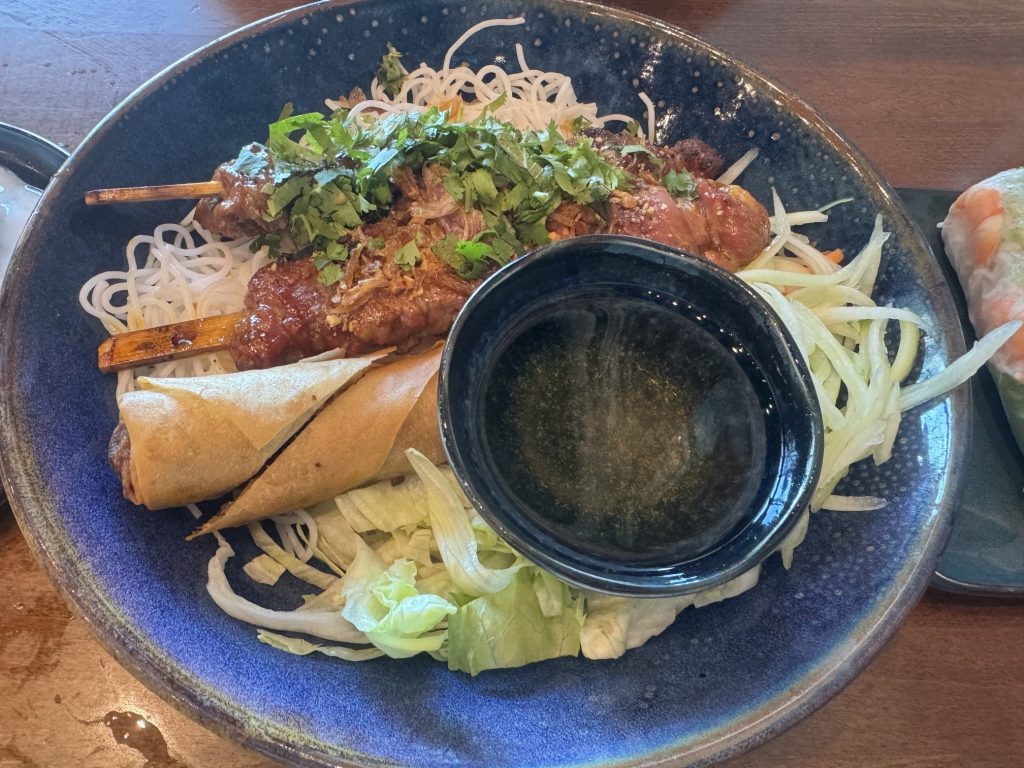
For my own practice, I don’t want a full stomach. If I need breakfast before training, I usually eat until I feel roughly 40 percent full. That’s not a scientific measurement; it’s simply my personal rule for saying, “I’ve eaten enough that I’m not hungry, but my stomach still feels light.”
The food itself does not have to be mysterious “Tai Chi food.” Vegetables are fine. Some meat is fine. Rice, fruit or other ordinary foods can be fine too. What matters to me is that the meal isn’t excessively large, greasy or difficult for my stomach to handle.
Tai Chi may look gentle, but good practice involves continuous weight changes, waist rotation, stepping, sinking and coordinated movement through the torso. Try doing that immediately after eating until you’re stuffed and your stomach will probably tell you what it thinks of the idea.
Exercise research supports the broader principle that pre-exercise nutrition is highly individual and depends on the duration, intensity and type of activity. Meal timing alone does not produce one universal answer, and gastrointestinal comfort is an important practical consideration.
Is It Okay to Practice Tai Chi on an Empty Stomach?
For many healthy people, gentle morning Tai Chi on an empty stomach can be perfectly comfortable. I wouldn’t make a universal rule saying that everyone must eat before Tai Chi.
The current article on ChenStyle says practicing on an empty stomach is not recommended because the brain receives less blood during fasting. I would remove that explanation. The physiology is more complicated than that, and current exercise research does not support such a simple rule.
Instead, pay attention to your own response.
If I wake up feeling energetic and I’m only doing a gentle session, I may not need much food. If I’m going to train longer, work harder, practice demanding Chen-style movements or do push hands afterward, I prefer not to begin feeling depleted.
Someone who becomes dizzy, shaky or weak when exercising without food obviously shouldn’t copy another practitioner’s fasting routine simply because it sounds traditional.
How Long Should You Wait After Eating Before Tai Chi?
There is no magic number that fits every meal and every person.
A bowl of fruit and a huge restaurant dinner are not the same digestive job. Twenty minutes of gentle form practice and an intense push-hands session are not the same exercise either.
My rule is based more on how the stomach feels than what the clock says. After a small meal, I may be comfortable relatively soon. After eating heavily, I wait considerably longer.
What I don’t like doing is finishing a large meal and immediately beginning deep stances, strong waist rotation or vigorous push hands. A full stomach makes the practice feel heavy and can cause bloating or general gastrointestinal discomfort.
That’s also a more defensible explanation than saying exercise after eating causes appendicitis. The current article makes that connection, but I recommend removing it because the evidence does not support presenting appendicitis as a consequence of ordinary post-meal exercise.
What Should You Eat Before Tai Chi?
I keep this surprisingly ordinary.
If I’m eating before morning practice, I want a small amount of food that I already know my stomach handles well. I don’t experiment with a giant plate of unfamiliar food ten minutes before training.
Vegetables can work. A little meat can work. Rice, fruit or other familiar foods can work. The exact menu matters less to me than portion size.
This is where experience has changed my thinking. When I was younger, it was easy to think about food in terms of “good” and “bad.” After many years of practice, I pay more attention to a simpler question:
How will I feel when I start moving?
If lunch makes you want to loosen your belt and take a nap, it probably wasn’t the ideal pre-Tai Chi meal.
What I Do Immediately After Tai Chi
When I finish practicing, I don’t immediately lie down.
I usually walk around a little, let my breathing return to normal and allow the body to gradually change from training back to ordinary activity. I’ll often drink some more warm water as well.
I think of this as a transition rather than some secret recovery technique.
Tai Chi itself teaches transitions. We don’t suddenly crash from one posture into another; we change gradually while maintaining control. I like treating the end of practice the same way.
There isn’t a medical requirement that everyone must walk around after Tai Chi. This is simply something that has felt right in my own training. A few quiet minutes also give me time to notice how the practice actually went instead of immediately grabbing my phone or collapsing onto the sofa.
Should You Eat Immediately After Tai Chi?
For an ordinary Tai Chi session, there is usually no need to panic about a tiny “nutrition window.”
I prefer to let myself settle first. After a longer session, I might walk around, drink some water and give myself perhaps 20 or 30 minutes before sitting down for a substantial meal.
Again, that isn’t a rigid medical rule. Someone practicing gently for fifteen minutes may feel completely different from someone who has just finished ninety minutes of forms, standing practice and push hands.
The more useful question is:
Has your breathing settled, and does your stomach actually feel ready to eat?
I Also Try Not to Eat Until I’m Completely Full
This habit isn’t limited to Tai Chi.
Even after practice, I don’t like eating until I feel stuffed. A comfortable meal leaves me feeling like I can stand up and continue the day. An oversized meal leaves the body working on the meal for the next few hours.
Traditional Chinese health culture has long valued moderation in eating. I don’t think we need to turn that idea into mystical language. Most of us already know the feeling of having eaten more than we needed.
Tai Chi makes you unusually aware of that feeling because the art asks you to pay attention to pressure, balance, breathing and the condition of the abdomen.
The better my body awareness became, the less appealing “completely full” felt.
A Simple Tai Chi Eating Routine
My own morning routine is uncomplicated. I wake up and drink comfortably warm water. If I’m hungry, I eat a light amount—roughly what I personally describe as 40 percent full. I avoid food that I know sits heavily in my stomach.
Then I practice.
Afterward, I don’t immediately lie down or rush into another big activity. I walk for a few minutes, drink some water, let my breathing and body settle, and eat when I’m ready.
That’s it.
No special powder. No magical Tai Chi breakfast. No need to turn every meal into a medical experiment.
Warm Water, Cold Water and Traditional Chinese Advice
I still prefer warm water. That’s part upbringing, part habit and part simple comfort.
But I would not tell a healthy student that one glass of cold water will damage their organs. Tradition deserves respect, but it doesn’t become stronger when we make claims that science can’t support.
At the same time, “hotter is healthier” is not a good rule either. Very hot beverages deserve genuine caution because thermal injury is a documented concern.
So when a student asks me what I drink before practice, my answer remains wonderfully boring:
Warm water. Not cold enough to bother me. Not hot enough to burn me.
The Best Meal Timing Is the One That Lets You Practice Well
Tai Chi teaches us to listen carefully—not just to an opponent, but to our own body.
Some people feel wonderful practicing before breakfast. Others need a little food first. Some digest a light meal quickly. Others need more time.
Rather than forcing everyone into exactly the same schedule, I think it is better to understand the principle: don’t make digestion and training compete unnecessarily.
Eat enough that you feel steady. Don’t eat so much that movement feels uncomfortable. Drink enough water to stay hydrated. Avoid drinks hot enough to burn you. Give yourself time to settle before and after practice.
After decades of martial arts, some of the habits I value most are the least dramatic ones.
Warm water. A light stomach. A little patience.
Then start moving.

