Read more about the article Understand The mysterious Tai Chi’s “Four ounces move a thousand pounds.”
tai chi Logo

Understand The mysterious Tai Chi’s “Four ounces move a thousand pounds.”

"Four ounces move a thousand pounds" is a technique in Tai Chi Quan for applying force. It is a metaphorical expression of the artistic aspect of striking in self-defense, as well as an advanced method in the realm of self-defense in Tai Chi Quan. Although it may seem straightforward to use force against an opponent, it actually contains rich internal principles and is profound in nature. It incorporates concepts such as leveraging, exerting force, combining forces, inertia, center of gravity, leverage, waist and hips, reflexes, and the principle of yielding to effectively defend oneself. It embodies the philosophy of achieving victory through the use of less force against greater force, slowness against speed, and weakness against strength. It represents the mystery and profoundness of self-defense in Tai Chi Quan, as well as the interpretation of the profound Tai Chi…

0 Comments
Read more about the article Practicing Tai Chi Must Understanding The Principles  – Ma Hong
Master ma Hong

Practicing Tai Chi Must Understanding The Principles – Ma Hong

In 1999, it was the 151st birth anniversary (1849-1929) of Grandmaster Chen Xin, the first-generation successor of Chen-style Tai Chi. Chen Xin was an outstanding Tai Chi theorist who comprehensively summarized and systematically expounded the principles and techniques of Chen-style Tai Chi, accumulated over nearly five centuries. His monumental work, "Illustrated Explanation of Chen-style Tai Chi Chuan," is the first and most comprehensive masterpiece of Tai Chi Chuan in China's history, shining with brilliance to this day. It still holds immense value in promoting and developing Tai Chi Chuan, particularly in terms of theory. Chen Xin once said, "To learn Tai Chi Chuan, one must first study books. By understanding the principles, learning the forms becomes natural. A diligent learner must prioritize the principles." He also cautioned against disregarding the study of theoretical principles, warning against falling into arrogance…

0 Comments
Read more about the article Wu wenhao – To cultivate oneself, one must first rectify the mind
tai chi Logo

Wu wenhao – To cultivate oneself, one must first rectify the mind

To practice Tai Chi Chuan, it is essential to understand its characteristics. Tai Chi Chuan first involves physical movements, which refer to its external form. Secondly, it encompasses internal aspects such as spirit, intention, and energy. Tai Chi Chuan integrates the external form with the internal spirit, intention, and energy, making them interdependent and forming a unified martial art. Therefore, whether practicing Tai Chi Chuan for fitness or combat purposes, both aspects cannot be disregarded. According to Wang Zongyue's "Thirteen Dynamics Song of Practice," it states, "The ultimate purpose of understanding intent is to prolong life and remain forever youthful." This indicates that the highest level of practicing Tai Chi Chuan is to promote longevity. This change in the purpose of practicing Tai Chi Chuan has emerged due to the changing times. In modern times, the emphasis of practicing…

0 Comments
Read more about the article The Nine Essentials (九要论)  1-4
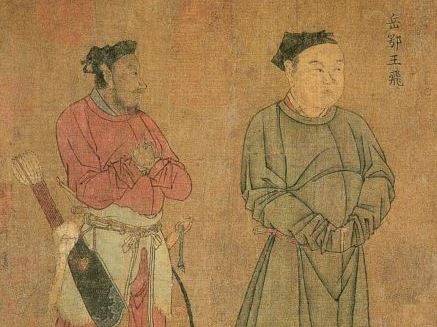
General Yue Fei

The Nine Essentials (九要论) 1-4

The Nine Essentials (九要论) The martial arts classic created by General Yue Fei during the Southern Song Dynasty in between 1103-1142.  "The Nine Essentials" is a martial arts classic that not only summarizes the general principles of martial arts from a theoretical perspective but also presents a comprehensive and eloquent system. It not only guides the practice of martial arts in general but also provides an avenue for artistic enjoyment. "The Nine Essentials" consists of nine sections that have a perfect internal numerical and logical structure. The content includes: One Unity, Two Qi, Three Joints, Four Extremities, Five Elements, Six Harmonies, Seven Advances, Eight Body Movent, and Nine Steps. The First Principle In all things, there is a unity amidst diversity, and in every division, there is a harmony. Therefore, in the vast expanse of the world, from all…

0 Comments

Master Wang Xian’s Tai Chi Quan Q&A. – 3

What should I pay attention to when practicing Tai Chi if I have practiced other styles of martial arts before? First, you need to identify the differences between Tai Chi and the martial arts styles you previously practiced. It is crucial to understand these differences before practicing Tai Chi to avoid unconsciously incorporating the feelings and habits from your previous styles into Tai Chi. Once you have identified the differences, especially the main ones, you can consciously avoid mixing them. For a considerable period of time when starting to learn Tai Chi, it is recommended not to simultaneously practice the styles you previously learned. Otherwise, you may unintentionally bring elements of your previous styles into Tai Chi. In Chinese martial arts, the distinction in "jin" (power, force) between different styles is a significant dividing line, so it is particularly…

0 Comments
Read more about the article Detail Explains why Tai Chi “Not move the hands”
martial secrets

Detail Explains why Tai Chi “Not move the hands”

About Tai Chi Chuan, Grandmaster Yang Chengfu had a concise and straightforward statement: "Those who practice Tai Chi Chuan do not move their hands. If they move their hands, it is not Tai Chi Chuan." He also said, "The root is in the feet, issued from the legs, controlled by the waist, and expressed through the fingers. The hands must follow and cannot move independently."

0 Comments

Ten Essential Principles of All Tai Chi

一、虚灵顶劲 - Keep your mind clear, and keep you neck and head going up naturally, 二、含胸塌腰 - keep you back and cheat bent, like bowl, when it turns,release more power and help to loose the body. 三、松腰养气- loose up the hips and prepare or reserved the qi or Dantian 四、分清虚实 - have control on solid or empty, for example empty feet, or weight shafting. 五、沉肩坠肘 - sing shoulder and drop elbow, to help you loose up your body, 六、以意行气 - use your thought to move the  qi, not the force 七、上下相随 - upbody and lower body or leg feets moving smoothly ,not broken moves. 八、内外相合 九、招势相连 - all move are connected, no broke moves, 十、动中求静 - inner pieces, claim yourself even in a ocean waves.

0 Comments

The Ethics and Moral Virtues of Chen Style Tai Chi Martial Arts

by Master Cheng Jincai PREFACE Around the world today, there is increasing interest in martial arts. Competitions are commonplace. More and more people are realizing the advantages of practicing martial arts, such as improved health and development of self-defense skills. It is common knowledge that exercise is a key factor in maintaining physical and spiritual health. According to the World Health Organization, 55% of all morbidity is related to lack of exercise. The maintenance of good health is beneficial not only for the person, but also the family, and even the entire country. So exercising is very important for every person. With increasing participation in martial arts, it is vital to understand the ethical and moral conduct expected and required of the martial artist. It is said that “Without standards, no advanced understanding can take shape.” It is for…

0 Comments