
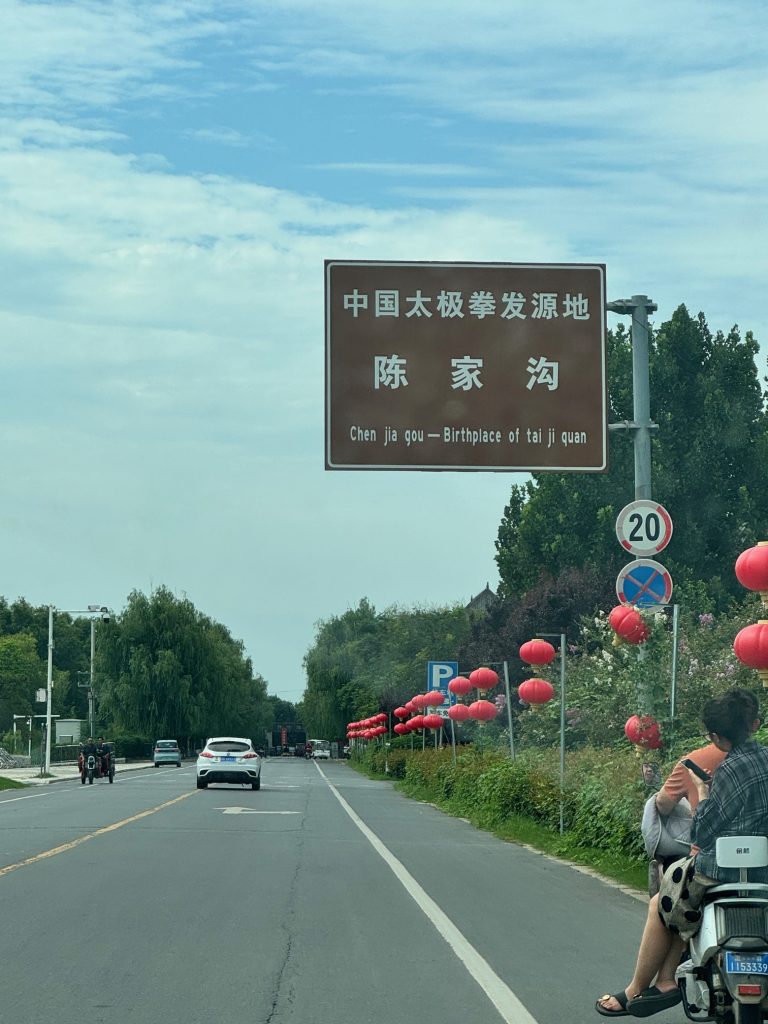
Chen Village, or Chenjiagou (陈家沟), is a small village in Wen County, Henan Province, China, best known around the world for its connection with Chen-style Tai Chi. For people who have practiced Chen Taijiquan for years, the name carries a certain weight. You hear about Chenjiagou in class, read about the Chen family, see photographs of old courtyards, and eventually start wondering what the place is actually like.
I had the chance to do more than visit. I lived and trained around Chen Village for years, and that experience changed the way I think about both the village and Tai Chi itself. Before arriving, I imagined a place almost frozen in martial arts history. The real Chenjiagou was more complicated and, in my opinion, much more interesting. It is a modern Chinese village where historical Tai Chi sites, training schools, ordinary homes, restaurants, shops, farms, tourists and local families all exist side by side.
What Is Chen Village?
Chen Village is the English name commonly used for Chenjiagou, a village in Wen County in China’s Henan Province. It is closely associated with the Chen family and the historical development of Chen-style Taijiquan. For martial artists, it has become one of the most recognizable places connected with traditional Chinese internal martial arts.
When people first hear the words “Tai Chi village,” they sometimes imagine that nearly everyone is outside practicing forms from sunrise to sunset. You certainly can see plenty of Tai Chi in Chenjiagou, especially around the larger schools and training areas, but it is still a living community. People have jobs, children go to school, families shop for groceries, businesses open and close, and daily life continues whether a group of foreign Tai Chi students is visiting or not.
That ordinary side of the village is important. Tai Chi did not develop inside a modern fitness studio or tourist attraction. It came out of a community where martial arts were part of family, village and everyday life. When you spend enough time there, the separation between “Tai Chi culture” and “normal village life” starts to feel less obvious.
Why Is Chen Village Important to Tai Chi?
Chenjiagou is strongly associated with the development and transmission of Chen-style Taijiquan, the style from which several later Tai Chi traditions developed. Generations of Chen family practitioners trained and taught in the area, and the village remains home to schools, memorial sites and cultural institutions connected with the art.
For someone who practices Chen-style Tai Chi, visiting the village can make names from books feel more real. Instead of reading about a place as an abstract historical location, you can walk through the village, see the environment, visit important sites and watch people training there today.
At the same time, I would be careful about turning Chen Village into mythology. Being born there does not automatically make someone a great martial artist, just as flying there from another country does not automatically make you a better Tai Chi student. Skill still comes from good instruction, careful practice and time. What Chenjiagou provides is context, history and access to a very concentrated Tai Chi environment.
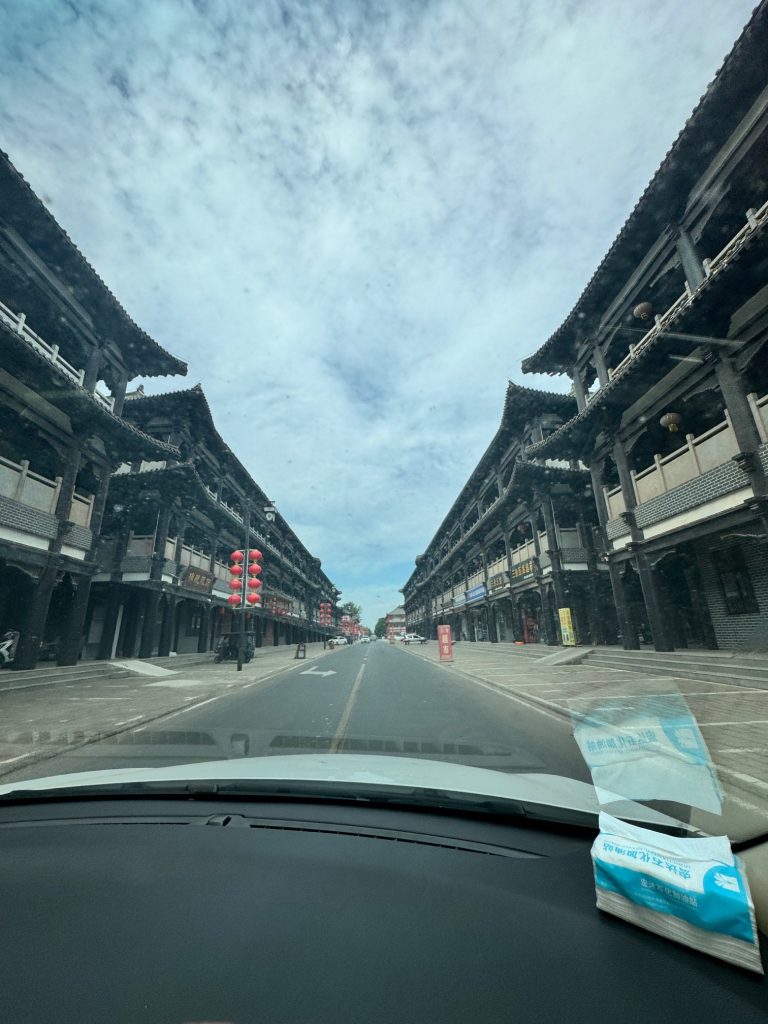
Chen Village Is Not a Martial Arts Theme Park
People sometimes arrive expecting Chenjiagou to feel like a traditional kung fu movie. That expectation can lead to disappointment. Chen Village has deep martial arts history, but it is not a movie set designed around foreign visitors.
There are cars, construction, modern buildings, mobile phones and ordinary businesses. Some historical-looking areas have been developed for tourism. You may see large groups of visitors at famous sites, while a few streets away daily village life continues without much attention to tourism.
For me, that makes visiting more worthwhile. You are not simply looking at a reconstruction of the past. You are seeing how an old martial arts tradition continues inside a changing modern community.
Visiting Chen Village
Once you understand what Chen Village is, the next question is practical, how do you actually visit Chenjiagou? If you are traveling from outside China, the journey requires a little more planning than visiting Beijing, Shanghai or another major tourist city, but it is very manageable.
The biggest thing I would tell first-time visitors is not to overcomplicate it. Get yourself to Henan Province, arrange the final transportation into Wen County and Chenjiagou, and give yourself enough time that the trip does not feel rushed.
How to Get to Chen Village
When I first traveled to Chenjiagou, I came through Beijing airpot code (PEK)and then continued toward Zhengzhou before making my way into Wen County and finally Chen Village. It worked, but it involved several stages of transportation, and after a long international flight every extra transfer feels longer than it looks on a map.
Today, I would generally look at Zhengzhou airpot code (CGO)as one of the most practical major gateways. Zhengzhou has a major airport and high-speed rail connections, and from there you can continue by road toward Wen County and Chenjiagou. If you have enrolled in a Tai Chi school, ask whether they offer airport or railway-station pickup. For someone visiting China for the first time, that can remove a lot of unnecessary stress.
I would not rely too heavily on an old blog post for exact bus numbers, fares or departure times. Transportation changes. Use current schedules shortly before traveling, especially for the final connection into the village. but for most the time if you get on the right bus and including hiring a private car, taking a taxi, or utilizing local buses that ply the route. The journey takes approximately 2-3 hours, allowing you to soak in the picturesque countryside along the way.
My First Arrival in Chen Village
The admission ticket into the village & Parking and walk-in the temple
Now, let’s talk tickets. Yes, Chen Village charges a fee if you want to wander its more popular areas. 30 RMB to be exact, which is just under $5 USD. It’s not going to break the bank, but if you’re like most travelers, you’re probably thinking, “Why pay if I don’t have to?”
That 30 RMB ticket supposedly goes toward preserving the charm and heritage of the village, but let’s be real—you’re here for the experience, not the bureaucracy. And while 30 RMB might seem like a small price to pay for access to this serene little paradise, wouldn’t it be nicer to keep that cash for another cup of coffee (or two)?
I still remember arriving after dark. After traveling through much larger Chinese cities, Chenjiagou suddenly felt incredibly quiet. There were very few cars compared with what I had just experienced, and the rhythm of the place felt slower almost immediately.
I found a small family-run place to stay. The room was basic, the neighborhood had narrow lanes, and the summer heat was intense. When I noticed an air-conditioning unit on the wall and learned that I could use it, I was probably happier about that than any historical Tai Chi site at that particular moment.
That first night taught me something useful about visiting Chen Village: don’t expect every part of the experience to look romantic. Sometimes the most important thing after twenty hours of travel is a cool room, something simple to eat and a bed.
Here’s where it gets interesting. If you’re not too keen on parting with your RMB for a entry ticket, there’s a cheeky little trick that locals—and a few savvy tourists—know about. There’s a narrow road on the right side of the village that lets you bypass the ticket booth entirely. Yep, you read that right. You can stroll right into Chen Village without flashing a single yuan.
Now, this isn’t exactly an official loophole. It’s more like an insider secret that’s passed along to those who know where to look. The road is narrow—so narrow, in fact, that you might second-guess whether it’s meant for public use. It feels like a hidden path from a fantasy novel, as if you’ve stumbled upon some secret garden entry that only the chosen few are privy to. But don’t worry, it’s legit. You won’t be the first (or the last) person to wander through Chen Village without a ticket, thanks to this hidden passage.
Of course, you’ll want to be subtle about it. No need to announce to the world that you’re dodging the official entrance. Just act casual, like you’re taking the scenic route, and you’ll blend in with the locals who’ve probably used this road a thousand times. A quick pro tip: The path may look deserted at first, but that’s part of the charm. It takes you through the quieter, more secluded parts of the village, giving you a behind-the-scenes look at local life before you emerge into the main tourist area.
Where to Stay in Chen Village
If you are mainly visiting historical sites for one day, staying elsewhere in Wen County can work. But if your purpose is Tai Chi, I would strongly consider staying inside or very close to Chenjiagou.
Being able to walk to your school or training area makes a big difference. You do not have to arrange transportation every morning, and you can experience the village when the tourist activity becomes quieter. Early mornings and evenings often give you a different feeling from the middle of the day.
Accommodation ranges from simple local guesthouses to rooms connected with Tai Chi schools. If you are enrolling in a training program, ask whether accommodation and meals are already included before booking anything separately.
What Should You See in Chen Village?
For a first visit, I would start with the main historical and cultural Tai Chi sites. The museums, memorial areas, Chen family history and major Tai Chi schools help explain why the village became internationally important.
But I would not spend the entire visit rushing from one attraction to another. Walk through the village. Look at the smaller streets. Watch people training when it is appropriate to do so. Eat something local. Sit down for a while instead of treating every hour like a checklist.
Some of my strongest memories from Chenjiagou are surprisingly ordinary. I remember inexpensive local noodles, quiet roads, little shops, summer heat, morning sounds and people going through their normal routines. Those details gave me a better feeling for Chen Village than simply standing in front of a famous sign and taking a photograph.

Yes, You Can Get Coffee
This may sound ridiculous in an article about the home of Chen-style Tai Chi, but coffee mattered to me. After years of living in the United States, I was used to starting the morning with it, and moving to a famous Chinese martial arts village did not magically erase that habit.
You can find coffee and modern drinks around Chenjiagou, although the experience may not resemble a large American coffee chain. When I was living there, some shops were extremely simple. I enjoyed that. You could buy a drink, sit down and watch village life outside without needing the whole experience to become another tourist attraction.
For just 20 RMB, or some options flavor for 22 RMB you can get yourself a cup of coffee that’ll give you that much-needed boost to explore this tucked-away gem.
But don’t expect any fancy cappuccino art or baristas asking you if you want almond milk. Nope, here in Chen Village, coffee is simple. It’s brewed in no-frills cafes that almost feel like an extension of someone’s living room. The cups are often mismatched, the spoons may not even match the cups, and the atmosphere is as laid-back as it gets. But somehow, it just works. You sip your coffee while watching village life unfold—locals going about their day, the occasional tourist wandering through, and the calming buzz of life that feels miles away from the hustle and bustle of big cities.
For 20 RMB, which is roughly $3 USD, the coffee doesn’t just fuel your caffeine fix—it feels like a cultural experience. It’s coffee with a side of authenticity, in a place where everything is stripped down to its basics. And that’s the beauty of it.
Prices and businesses change, so I would not plan a 2026 trip around a specific café or an old price I remember. The larger point is that Chen Village is modern enough that everyday comforts are available, even while much of its identity remains connected to traditional martial arts.
Can Foreigners Learn Tai Chi in Chen Village?
Yes. Foreign students have been coming to Chenjiagou for years, and several schools offer programs for international practitioners. You can find short courses lasting days or weeks as well as longer programs lasting months.
If you plan to train, contact the school before you arrive and ask specific questions. Who will actually teach you? How many hours per day do students train? Are classes private or group-based? Is accommodation included? Does anyone speak English? Which forms, weapons or push-hands skills will the program cover?
Do not choose a school only because the name sounds famous. A school’s reputation and your personal day-to-day training experience are not always the same thing.
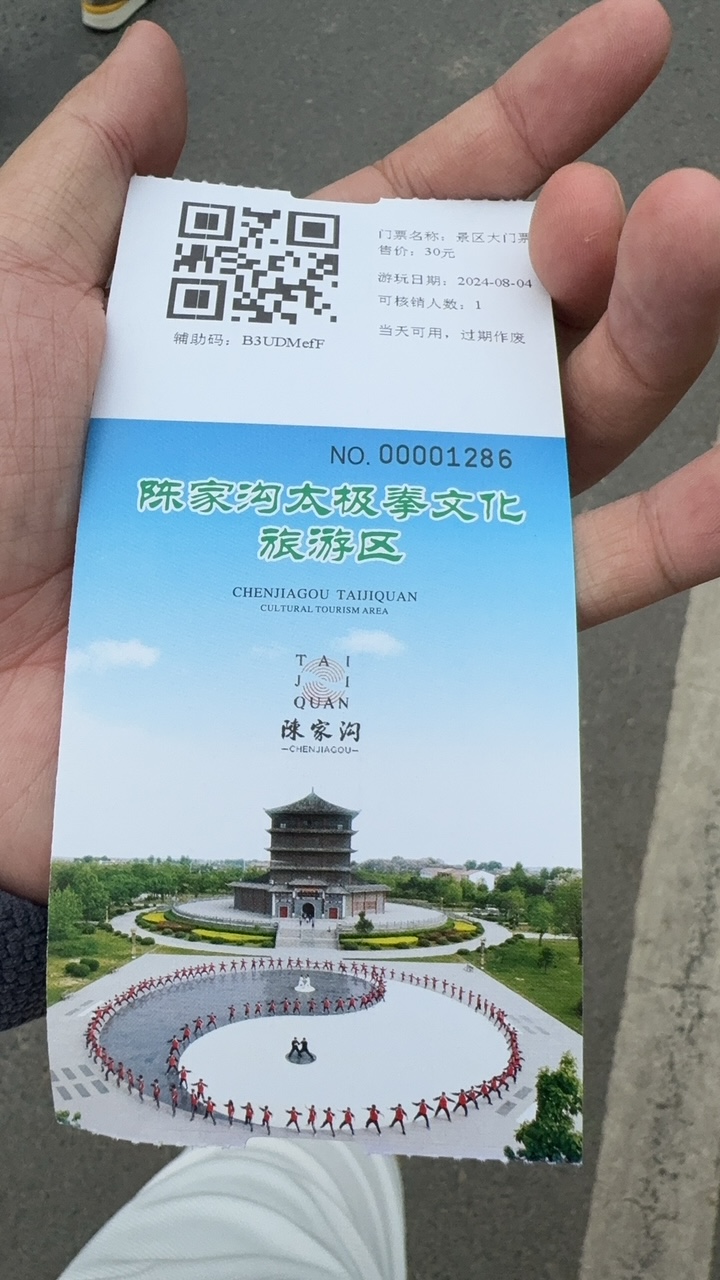
Ticket for the temple ( one entry oneday only,you cannot reuse it even with the same day, I tried)
How Long Should You Stay?
If you only want to see Chen Village, a short visit can be worthwhile. You can see major sites and get a basic feeling for the place relatively quickly. But if Tai Chi is the reason you are traveling there, I would give yourself more time if your schedule allows it.
A week gives you time to slow down. Several weeks allow you to establish a training routine. Months make it possible to receive corrections, work on them, discover that you misunderstood half of them, and then ask better questions.
I spent years there, but I would never claim everyone needs to do that. You can learn excellent Chen Tai Chi outside China. The advantage of staying longer in Chenjiagou is not that some secret technique suddenly appears after day thirty. The advantage is repetition, observation and fewer distractions from your original reason for going.
The Best Time to Visit Chen Village
For comfortable sightseeing and outdoor training, I personally prefer spring and autumn. Henan summers can become very hot, and winter can be colder than international visitors sometimes expect.
However, there is no perfect season that guarantees a perfect trip. If you are visiting for a specific teacher, school or Tai Chi event, those dates may matter more than the weather. Just prepare realistically. Summer means heat, winter means cold, and rainy days do not care that you flew halfway around the world to photograph the village.
Food and Daily Life
Food in Chen Village can be inexpensive compared with major international cities, especially if you eat at small local restaurants instead of looking for Western-style meals. One of my early meals was a simple noodle dish that cost only a few RMB at the time, and I remember being surprised by both the price and how different it was from what I had imagined when someone first described it to me.
Living there taught me that long-term Tai Chi travel is mostly built from ordinary routines. You need breakfast. You need laundry. You need water. You occasionally need medicine, transportation or a phone charger. None of this sounds exciting, but those ordinary details determine whether a long stay feels sustainable.
That is another reason I prefer thinking of Chen Village as a real community rather than a martial arts attraction. The Tai Chi history matters, but you experience it while living a normal human life.
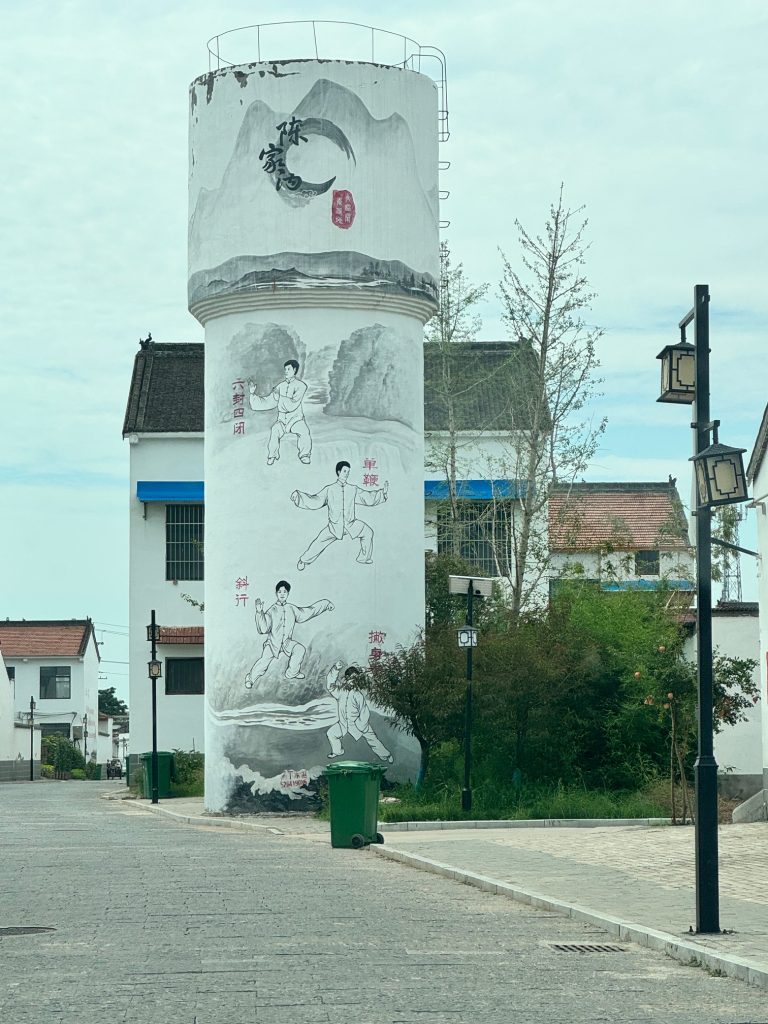
water tower in chen village,
Is Chen Village Worth Visiting?
If Chen-style Tai Chi is an important part of your life, I believe Chen Village is worth visiting at least once. You do not need to believe every traditional story, and you certainly do not need to assume that simply standing in Chenjiagou will improve your form. What the village gives you is perspective.
You can see where generations of Chen practitioners lived and trained. You can visit historical sites, watch modern schools operating and observe how Tai Chi has become both a local tradition and an international cultural attraction. More importantly, you can compare the Chenjiagou you imagined with the place that actually exists.
For me, that difference was valuable. The real Chen Village was less mysterious than the one I had imagined, but it was also much more human. I found old martial arts traditions mixed with new buildings, farmers living beside Tai Chi schools, local restaurants beside international students and ordinary village mornings unfolding around an art that had traveled to almost every corner of the world.
My Advice Before Visiting Chen Village
Go with curiosity, but don’t expect magic. Check current transportation, visa requirements, ticket prices and opening hours before traveling. If you are training, contact your school in advance and understand exactly what is included. Bring comfortable shoes, appropriate clothing for the season and enough flexibility to handle the small surprises that always come with traveling somewhere unfamiliar.
Most importantly, give yourself time to see the village rather than only photographing it. Visit the important Tai Chi sites, but also walk around. Eat local food, watch how people live and notice what happens when the tour groups leave. Chenjiagou makes more sense when you stop looking only for the legendary birthplace of Tai Chi and begin seeing the real village underneath that reputation.
That is the Chen Village I remember most clearly. It is historically important, sometimes commercial, occasionally confusing, surprisingly ordinary and still deeply connected with Chen-style Tai Chi. If you visit with realistic expectations, those contradictions are not a disappointment. They are what make Chenjiagou worth seeing.