Read more about the article Wang Yongquan’s Yang Style Tai Chi: Principles, Internal Skill & 13 Postures
Tai Chi

Wang Yongquan’s Yang Style Tai Chi: Principles, Internal Skill & 13 Postures

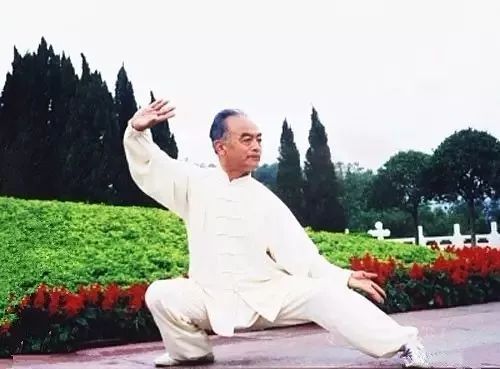
The fundamental characteristics of Yang-style Tai Chi Chuan are natural, gentle, and graceful, making the practitioner feel comfortable during the movements. When practicing Tai Chi, one should focus on demonstrating the features of relaxation, stability, slowness, and evenness. On this basis, gradually learn to use internal energy, achieving a state of relaxation, expansiveness, connectivity, and emptiness.

0 Comments

Why Do Famous Masters Have Short Lives – Hong Jun Sheng ?

Quote from Jiang Jiajun's book "Dialogues with Tai Chi Masters." During the conversation, Brother He asked Master Hong, "Does practicing Tai Chi Chuan lead to longevity?" Master Hong looked at Brother He and said, "I know what you want to ask. You want to know why some Tai Chi Chuan predecessors and masters passed away early. What is the reason behind it?" Master Hong continued, "People who practice Tai Chi Chuan should have a long life; their achievements will be greater. 'No longevity' means they do not live to an old age. Master Chen Changxing lived to eighty-two, his disciple Yang Luchan lived to seventy-two, Master Chen Xin lived to eighty, and my teacher Master Chen Fake also lived to over seventy. They can all be considered relatively long-lived. If they had passed away in their forties or fifties,…

0 Comments

The Story of Chen Jia Gou -4

According to historical records, Chen Wangting reorganized and innovated his family's martial art techniques, which later generations named Chen-style Tai Chi. He also created routines like the Chen-style Tai Chi Spring and Autumn Big Knife. In the modern martial arts world and Chenjiagou village, Chen Wangting is revered as the founder of Chen-style Tai Chi. However, during that time, the dissemination of Chen-style Tai Chi was limited to the Chen family. Chen Wangting's journey to becoming the founder of Chen-style Tai Chi is filled with legendary stories. To know the detailed content, please read about Chen Wangting's astonishing legendary career. In his youth, he killed a drum beater in the school arena of martial arts examinations and was forced to seek refuge on Jade Belt Mountain due to difficult circumstances. It is said that during the Chongzhen period of…

0 Comments

The Story of Chen Jia Gou 5-6

Wang Ting was furious. Originally, he only wanted to teach the drum officer a lesson and had no intention of killing him. Who would have thought that his strike would be too forceful and the drum officer couldn't deflect the blow, resulting in his instant death. With this turn of events, the cheers in the training ground immediately ceased, replaced by a wave of fear. Wang Ting thought to himself that a true hero should take responsibility for his actions and report to the chief examiner that he had killed someone.           With a flushed face and an air of anger, Wang Ting rode his horse towards the chairman's platform where the chief examiner sat. He sheathed his sword, dismounted from his horse, and knelt before the chief examiner, saying, "Reporting to Sir, this student has killed 'Bie'!" The chief examiner, puzzled by the change in the atmosphere, pretended to be composed and said in an official tone, "What's so remarkable about killing a 'Bie'?" Wang Ting replied, "I killed a person named 'Bie'!" Only then did the chief examiner realize the truth. Seeing Wang Ting's handsome and dignified appearance, he couldn't help but feel sympathy for his talent. He briefly inquired about the reason for killing 'Bie' and with a snort from his nostrils, he slowly said, "When you kill someone, you must pay with your own life!" However, he tilted his head and gave Chen Wang Ting a stern look, indicating that he should leave quickly. Wang Ting understood and bowed to the chief examiner, then swiftly mounted his horse. With a flick of his legs and a tug on the reins, the red horse's hooves kicked up dust as it galloped away from the field.

0 Comments
Read more about the article Chen Style Tai Chi is the best exercise for children and Young Kid.
tai chi Logo

Chen Style Tai Chi is the best exercise for children and Young Kid.

Because practicing Chen-style Tai Chi Quan adopts abdominal breathing, which requires gentle inhalation and long exhalation. This breathing method allows the inhaled qi to converge into the spine, without protruding the chest forward. Instead, the chest should contract inward with inhalation. During exhalation, the internal qi descends and sinks below the navel to the Guan Yuan acupoint. This breathing method conforms to the physiological circulation pattern of the human body and enhances the requirements of physiological circulation. It increases blood circulation and provides sufficient blood and oxygen supply to the brain, promoting effective relaxation of the brain.

0 Comments
Read more about the article The three stages of Chen Style Tai Chi -2
tai chi Logo

The three stages of Chen Style Tai Chi -2

One movement is one movement, difficult to seamlessly connect, continuous and uninterrupted. When practicing, there should be variations in speed, alternating between fast and slow. Fast should not be scattered, slow should not be stagnant. The whole body should be coordinated, unified in one breath. Even if the postures are correct, the timing is accurate, and the breathing for each movement is accurate, and the understanding of the purpose and application of each movement is clear, it does not immediately progress to the second stage. It is necessary to gradually eliminate the stiffness in the body through repeated refinement. This process takes two to three years. Only when all aspects are correct and the original stiffness in the body is eliminated can one ascend to the stage of understanding Jin. The second stage: the stage of understanding Jin. Understanding…

0 Comments
Read more about the article Practicing Tai Chi promotes the health and longevity of the human body.
tai chi Logo

Practicing Tai Chi promotes the health and longevity of the human body.

Life depends on movement, which is the truth of health and longevity. Exercise brings about specific changes within the body, promoting overall health and longevity. Now let me discuss the internal effects of exercise. The human body is more complex than any machine. Human existence involves not only physical and chemical processes but also physiological and psychological changes. Each of these changes directly or indirectly affects the body. Exercise helps to mediate and balance these changes, making them beneficial to the body's health. There are four elements to human health: emotions, nutrition, exercise, and the appropriate supplementation of nutrients. Emotions are the foundation of thoughts, nutrition is the foundation of substances, and nutrients are essential for the body's anti-aging needs. Exercise can balance the body's Yin and Yang, regulate the flow of nutrients and defensive Qi (Wei Qi), aid…

0 Comments
Read more about the article Practicing Tai Chi Must Understanding The Principles  – Ma Hong
Master ma Hong

Practicing Tai Chi Must Understanding The Principles – Ma Hong

In 1999, it was the 151st birth anniversary (1849-1929) of Grandmaster Chen Xin, the first-generation successor of Chen-style Tai Chi. Chen Xin was an outstanding Tai Chi theorist who comprehensively summarized and systematically expounded the principles and techniques of Chen-style Tai Chi, accumulated over nearly five centuries. His monumental work, "Illustrated Explanation of Chen-style Tai Chi Chuan," is the first and most comprehensive masterpiece of Tai Chi Chuan in China's history, shining with brilliance to this day. It still holds immense value in promoting and developing Tai Chi Chuan, particularly in terms of theory. Chen Xin once said, "To learn Tai Chi Chuan, one must first study books. By understanding the principles, learning the forms becomes natural. A diligent learner must prioritize the principles." He also cautioned against disregarding the study of theoretical principles, warning against falling into arrogance…

0 Comments