Wuji Stance Explained- How to Stand, Relax & Prepare for Tai Chi

Almost for all Tai Chi and any martial arts practitioners, the training is always begins with a fundamental stance. The Ma Bu, or "horse stance," is one of the most iconic basic learning. Why the name? Simple—it mimics the posture of a horse, with both feet slightly wider than shoulder-width, a steady and strong base, and a balanced, grounded position. Ma Bu is considered the foundation of martial arts training. In fact, there’s an old Chinese saying: “One year of Ma Bu is more beneficial than three years of practicing forms.”  how important to Ma Bu. The Wuji Stance is a another variation of Ma Bu, or at least shares similarities in its goals. While Ma Bu focuses on strength and stability, Wuji Stance serves a broader purpose in building your fundamental structure and mental focus , and the goal to get rid or remove the stiffness or  the energy prevent you from Tai Chi relaxation or call Loose . There’s also another foundational stance known as the Hunyuan Stance, often practiced by beginners in Tai Chi. Though Wuji Stance and Hunyuan Stance may seem similar, they are distinct in their purposes and practice. Many people confuse about the two stance, but understanding their differences is key.
0 Comments

Yang Style Taiji (Tai Chi) Applications

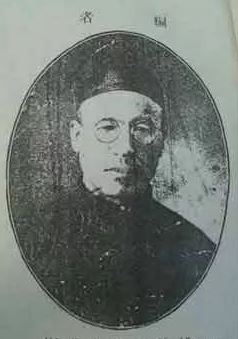
   Tung Ying-Chieh (董英杰) was a prominent figure in the world of Tai Chi Chuan (Taijiquan), celebrated for his profound contribution to the martial art's development and dissemination. Born in 1897 in Ren County, Hebei Province, China, Tung was introduced to martial arts at a young age. His dedication and talent in martial arts led him to become one of the most respected Tai Chi masters of the 20th century.

0 Comments
Read more about the article Yao Style Traditional Tai Chi Chuan Cultivation Method
Yao fun chun

Yao Style Traditional Tai Chi Chuan Cultivation Method

Mr. Yao Minglan, styled Fuchun, from Zunhua City, Hebei Province, was a renowned martial artist during the Republic of China era, dedicating his life to martial arts and advocating for the national skill. In 1929, Mr. Yao, together with his fellow disciple Mr. Jiang Rongqiao, co-authored "Lectures on Tai Chi Chuan," which was published in Nanjing and Shanghai in 1930. The book, easily understandable and an excellent teaching material for Tai Chi Chuan, received endorsements and prefaces from Zhang Zhijiang, Li Jinglin, Yu Youren, Zhang Zhankui, and Huang Bainian. Unfortunately, their planned publication of Wang Zongyue's direct lineage of Tai Chi Long Fist (108 forms) did not come to fruition. Nevertheless, Tai Chi Long Fist continues to be passed down in Zunhua, characterized by stretching and bone pulling, encompassing ten major forms including dragon, snake, crane, tiger, horse, chicken, eagle, bear, phoenix, and monkey, with a 20-character secret to its application, offering excellent training effects.

0 Comments
Read more about the article Must Read Yang Yutan’s “Three Principles”/Guan Zhenjun
martial secrets

Must Read Yang Yutan’s “Three Principles”/Guan Zhenjun

Yang Yutan, the martial arts master, was highly respected in the martial arts community. I've heard many stories about Master Yang from my teachers Wang Peisheng, Zheng Shimin, my martial uncles Li Bingci, Weng Fuqi, as well as senior fellow students Gao Zhuangfei and Chen Xingbo. The most memorable aspect to me was his "Three Principles": "Not afraid of criticism regarding martial skills", "Do not argue about martial theory", and "Do not compete for fame and gain". These "Three Principles" were the guiding principles for Master Yang's martial arts practice and personal conduct.

0 Comments
Read more about the article How Tai Chi Relax your shoulders; a hundred explanations
Tai Chi

How Tai Chi Relax your shoulders; a hundred explanations

In the words of Grandmaster Yang Chengfu in "Ten Essentials of Taijiquan": "Sink the shoulders and drop the elbows. To sink the shoulders means to relax and allow them to hang down. If they cannot be relaxed and allowed to hang down, then the two shoulders will lift up, and the qi will also rise, causing the entire body to lose strength. To drop the elbows means to let the elbows hang down loosely. If the elbows are raised, the shoulders cannot sink, and the opponent can easily break your structure, similar to the external martial arts' concept of breaking power."

0 Comments
Read more about the article 7 Tips to loose up when practice Tai Chi
Tai Chi

7 Tips to loose up when practice Tai Chi

Warm-up preparation According to the sequence of practicing boxing, warm-up is essential for relaxation. Before punching, stretch your muscles, move your joints, and gently move your whole body, which helps to relax both physically and mentally. Unfortunately, many practitioners neglect these simple warm-up exercises because they don't value their importance. Even if they do warm up, it's often done half-heartedly. Little do they know that without proper warm-up, the effectiveness of boxing will be compromised, and it may even lead to injuries. Cultivate a tranquil mind A calm mind leads to a relaxed body, and a relaxed body facilitates a tranquil mind. They are interdependent and mutually reinforcing, forming a dialectical relationship. If you talk while practicing boxing, it will not only disrupt your movements and disperse your internal energy ("qi") but also make it challenging to relax your…

0 Comments
Read more about the article Wang Yongquan’s Yang Style Tai Chi: Principles, Internal Skill & 13 Postures
Tai Chi

Wang Yongquan’s Yang Style Tai Chi: Principles, Internal Skill & 13 Postures

The fundamental characteristics of Yang-style Tai Chi Chuan are natural, gentle, and graceful, making the practitioner feel comfortable during the movements. When practicing Tai Chi, one should focus on demonstrating the features of relaxation, stability, slowness, and evenness. On this basis, gradually learn to use internal energy, achieving a state of relaxation, expansiveness, connectivity, and emptiness.

0 Comments

Can Tai Chi Really Fights ?

This is question been going around for very long time, So many people still confused till today,  I get why people are unsure, have doubt , I will Clearly all the clouds for you in this article. we will explain everything about Tai Chi and its changes time through times. The Origin, About 390 years ago, Tai Chi was created in Ching Dynasty , it was set of movement combine softness and hardness, the slowness and fastness, the Yin and the Yang,  the very origin is still unsure,  but  now days Some says, Chen Wangting in Chen village Henan province,, Some say, Chang San Feng from Wutang Mountain. Both place mention and have “history” that Tai Chi practicer was use for either Bodyguard or for Combat. It was well documented piece history in the time.  overall Officials in China…

0 Comments