Master Wang Xian’s Tai Chi Quan Q&A. – 2

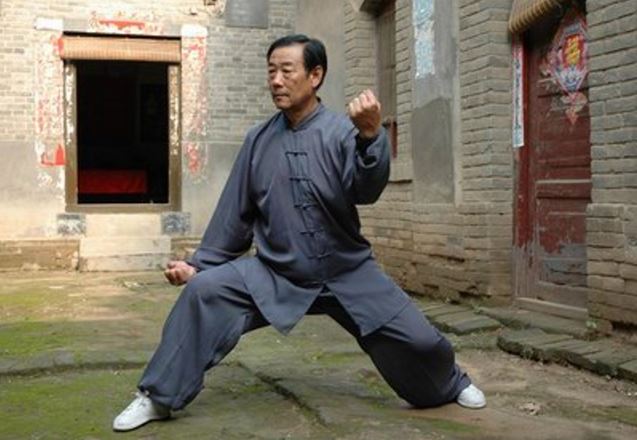
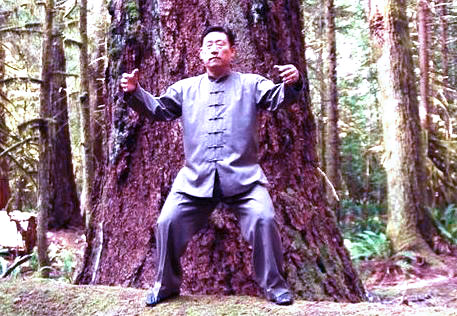
What is the best time of day to practice Tai Chi? When it comes to the timing of Tai Chi practice, the key is to choose a suitable time for yourself. How should this be understood? Firstly, consider your free time and consciously arrange a systematic schedule if possible. That would be ideal. Secondly, choose a time when you feel relatively relaxed and at ease. Even if you have free time, if your mind is burdened or restless, it will be difficult to practice Tai Chi effectively. Of course, some people find that engaging in Tai Chi when they are feeling agitated helps them gradually calm down. This is one of the psychological benefits of Tai Chi practice, but it typically applies to individuals who have been practicing for a longer time and have developed a certain level of…

0 Comments

Must reads Master Wang Xian’s Tai Chi Quan Q&A. – 1

These questions are directly derived from the practice of Tai Chi Quan, mainly for fitness purposes, and have strong relevance. Experts have provided detailed explanations for these questions. We have selected some representative and typical questions and asked experts to supplement and revise them, compiling them here. The complete answers are easy to understand, practical, and avoid unnecessary complexity, making them very helpful for Tai Chi Quan fitness. Which style of Tai Chi Quan is good to practice? There are many different styles of Tai Chi Quan, with Chen, Yang, Wu, Wu (Hao), Sun, and other styles being widely spread and relatively famous. Each style of Tai Chi Quan has various routines, some simple and others complex, including barehand routines and weapon routines. This provides a wide range of choices for people to practice Tai Chi Quan, suiting various…

0 Comments
Read more about the article Why does Grandmaster Chen Fake only Pass down forms, pushing hands, and free sparring, but not weapons?
tai chi Logo

Why does Grandmaster Chen Fake only Pass down forms, pushing hands, and free sparring, but not weapons?

This Quote is taken from Mr. Jiang Jiajun's original work "Dialogues with Tai Chi Masters" - Original Records of Master Hong Junsheng's Oral and Demonstrative Teachings. [April 13, 1986] Today is Master Hong's birthday, but I couldn't make it. I brought a small gift and came to visit Master Hong. It was drizzling when I arrived at Master Hong's house early in the morning, and he was practicing his skills. Upon seeing me, he finished his practice, sat down for a moment, and then invited me to have breakfast together. Master Hong's wife was busy attending to us and seemed very pleased. After the meal, he took out a pack of premium tea leaves and brewed a strong pot of tea. Then he got busy with other matters. During our tea conversation, Master Hong asked, "Do you know why…

0 Comments
Read more about the article How The Eight Trigram Palm and the Way of Health Preservation?
Sun lutang

How The Eight Trigram Palm and the Way of Health Preservation?

The Influence of Baguazhang on the Musculoskeletal System In the practice of Baguazhang, there is an emphasis on the principles of "rolling, drilling, expanding, and wrapping," which relate to the changes in force and posture of the upper limbs during training. "Rolling" refers to circular rotating arm movements, "drilling" involves both spinning and forward spiral arm movements, "expanding" means pushing outward, and "wrapping" involves inward wrapping and embracing. All four types of movements require the contraction of the muscles in the upper limbs to generate power. During training, it is necessary to incorporate rolling and drilling, generating both inward contracting force and outward expanding force. "The combination of the extraordinary and the ordinary" refers to the emergence of contradictions. All the force in Baguazhang is manifested through the mutual opposition of rolling, drilling, expanding, and wrapping forces, arising from…

0 Comments
Read more about the article Chen Xiaowang Talk Fa Jin ( release Energy) Secret Talks
Chen Xiaowang

Chen Xiaowang Talk Fa Jin ( release Energy) Secret Talks

Chinese martial arts are rich and diverse, each with its own distinctive style and system. However, the concept of "offense and defense" is shared by all. The defensive side often employs softness, while the offensive side relies more on hardness. What is meant by hardness? When issuing force, the internal and external should unite as one, with a vigorous spirit, delivering one's own power to the point of attack. This is the highest standard of hardness. Chen-style Tai Chi Quan also has its unique aspects when it comes to issuing force. It not only utilizes the fists, elbows, shoulders, feet, knees, and major joints to issue force but also requires that every part of the body is capable of issuing force. The boxing manual states, "Only when the five yin and five yang merge without bias can one possess…

0 Comments

Incredibale grandmaster Wang Xian Explain (Na Jin)

Only by applying skillful techniques to seize the opponent and prevent their escape and evasion can striking be executed effortlessly and yield favorable results. When applying seizing techniques, one must be light, agile, and clever in their movements, so that the opponent is captured without even realizing it, embodying the essence of "the utmost of skill" as mentioned in Sun Tzu's "The Art of War." Being light, agile, and clever means that when attempting to seize, one should not exert excessive force with their hands. The engagement and entanglement with the opponent's hand should be light and responsive. By the time the enemy becomes aware, the lightness has transformed into heaviness, making it difficult for them to escape. Seizing techniques should be applied in a flexible and alternating manner, adapting and responding to the opponent's changes. Only through agile…

0 Comments
Read more about the article Detail Explains why Tai Chi “Not move the hands”
martial secrets

Detail Explains why Tai Chi “Not move the hands”

About Tai Chi Chuan, Grandmaster Yang Chengfu had a concise and straightforward statement: "Those who practice Tai Chi Chuan do not move their hands. If they move their hands, it is not Tai Chi Chuan." He also said, "The root is in the feet, issued from the legs, controlled by the waist, and expressed through the fingers. The hands must follow and cannot move independently."

0 Comments