
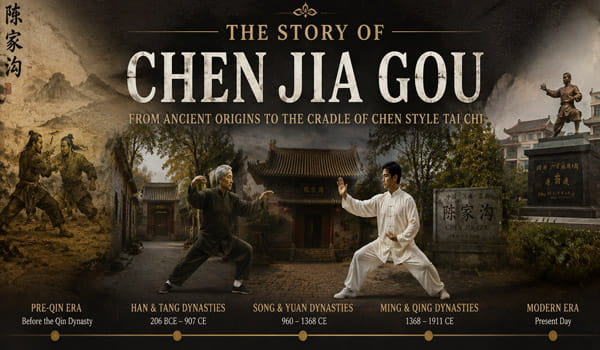
China has a rich diversity of martial arts schools, which is unparalleled in the history of world martial arts. Each school and faction has its own unique style and strengths, and can be considered vast and profound. However, what reasons led to the formation of numerous schools?
In ancient society, due to underdeveloped civilization and internal and external conflicts among different ethnic groups, bloodshed and warfare were prevalent. In order to survive under various environmental influences, people developed self-defense techniques, engaged in fights and vendettas, protected their families and villages, practiced assassination and theft, and engaged in heroic acts and escort missions, among others. These practices were passed down from generation to generation within family traditions, forming close-knit relationships between masters and disciples. Additionally, living in close-knit communities with fixed geographical locations resulted in different schools maintaining their own unique lineages, guarding their secrets and remaining closed off from each other. Thus, various styles of martial arts emerged in the early stages, characterized by private conflicts and distinctive social phenomena. As time progressed and society developed, the founders and masters of different martial arts schools retreated to the mountains and forests, embracing poverty and solitude. They devoted their lives to relentless exploration and the development of martial arts, eventually leading to their flourishing and diversification during the Ming and Qing dynasties. Tai Chi Chuan also gradually took shape during this period. Many of the Tai Chi Chuan schools that exist today are directly or indirectly derived from Chen-style Tai Chi Chuan. To trace the origin and development of Tai Chi Chuan, we must start with the history of Chen-style Tai Chi Chuan.
Since its inception, Chen-style Tai Chi Chuan has undergone research and transformation through the generations. It has evolved from broad and inclusive to refined and definitive, with a history of over 600 years. Its techniques, forms, health benefits, fitness aspects, and self-defense capabilities have been highly regarded by people worldwide. However, the origins of the Chen family’s creation of Tai Chi Chuan, as well as the historical context of their relocation to Wen County in Henan Province, remain unfamiliar to the general public.
To understand the origins and evolution of Chen-style Tai Chi Chuan, we must trace back to the late Yuan Dynasty in China.
During the late Yuan Dynasty, in order to maintain their decaying ruling regime, the rulers implemented brutal political oppression and economic exploitation, inflicting heavy suffering on the common people and triggering the great peasant uprising at the end of the Yuan Dynasty. Zhu Yuanzhang, a native of Fengyang in Anhui Province, led one of the rebel forces. In the power struggle for personal gain, various rebel forces engaged in brutal infighting, resulting in a scene of unimaginable horror. In order to preserve their strength and expand their forces, Zhu Yuanzhang led his rebel army to join the largest rebel force at that time, the Red Turban Army. His outstanding performance and military talent in the Red Turban Army earned him the trust of his comrades.
-Grandmaster Cheng Jincai 2010