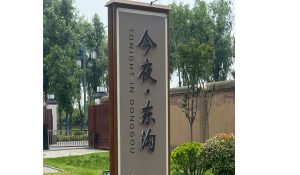
Zhao Bao Tai Chi is a traditional form of Taijiquan associated with Zhao Bao in Wen County, Henan Province. If you visit Zhao Bao today expecting a street filled with Tai Chi schools, old masters, and martial arts tourists, however, you may be surprised. I certainly was.
Zhao Bao is very close to where I grew up, which may sound strange considering how long it took me to actually go there with the intention of looking for Tai Chi history. When something is close to home, you often assume there will always be another chance to visit. You pass the road, hear the name, know roughly where the place is, and never really stop to look. Eventually I decided to go back and see Zhao Bao differently, not simply as a nearby town I had known since childhood, but as the place behind the name Zhao Bao Tai Chi.
Going Back to Zhao Bao
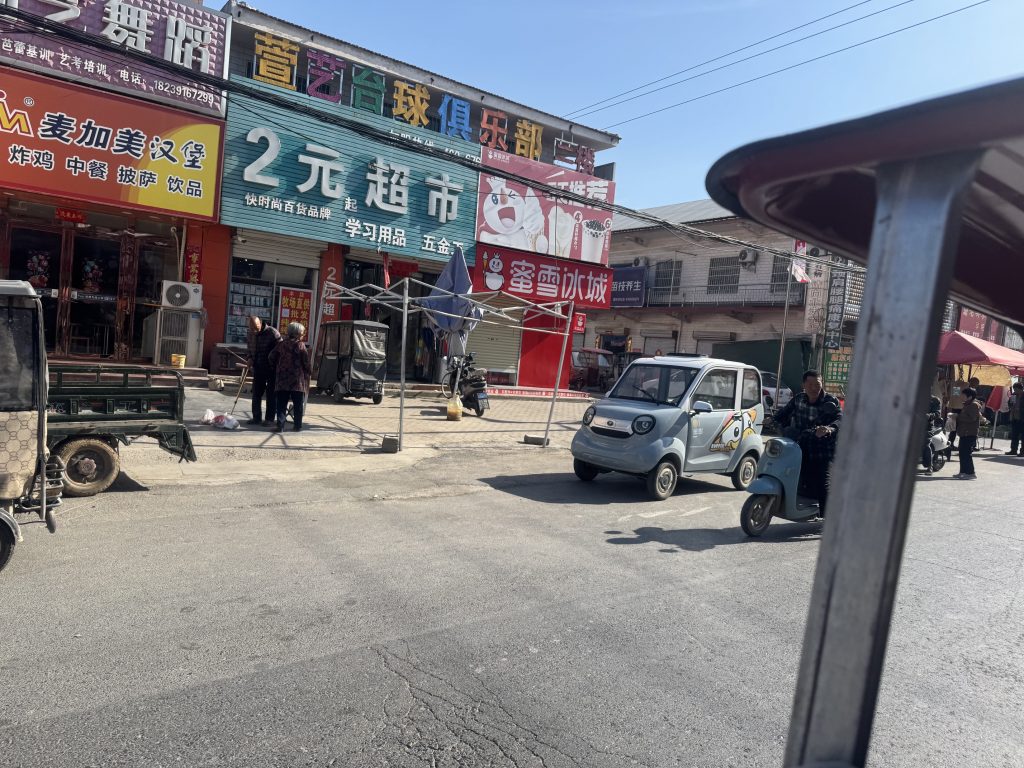
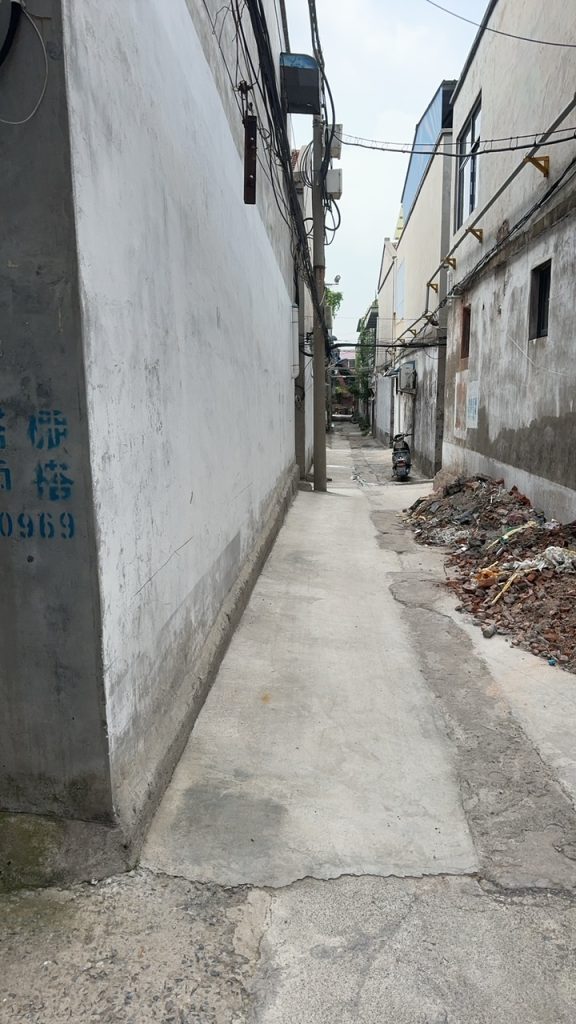
When I returned, I wanted to walk the streets, look at the buildings, find Tai Chi schools, and see what remained of the martial arts tradition that had made the town famous among Tai Chi practitioners. The first thing that struck me was how ordinary Zhao Bao looked. There was no huge entrance announcing that I had arrived at the home of Zhao Bao Tai Chi, and there were not dozens of martial arts schools lined up along the street.
I walked along the main road and looked into some of the smaller lanes. I paid attention to signs, courtyards, storefronts, and anything suggesting organized Tai Chi teaching. In the end, I found only one obvious Tai Chi school sign. That genuinely surprised me because I had imagined that a place associated with such a well-known Tai Chi tradition would show its martial arts identity much more openly.
Of course, that does not mean Tai Chi has disappeared from Zhao Bao. Traditional teachers may still teach quietly from their homes, and local students may already know who to contact without needing a large sign outside. That is very common in traditional Chinese martial arts. Still, from the viewpoint of an ordinary visitor walking through the town, Zhao Bao Tai Chi is something you have to look for.
.
The Zhao Bao I Remember From the 1980s
Walking through Zhao Bao also brought back memories from when I was young. In the early 1980s, the main commercial street was not especially large. From what I remember, the busiest section was only a few hundred meters long. There was a large factory around the central area, along with a small hospital, a theater, government offices, shops, and ordinary local businesses.
This was never a tourist town built around martial arts. It was a working community where people went to work, bought food, raised families, and lived normal lives. On local market days, which we called ji hui, the atmosphere changed completely. Farmers and small sellers came in from the surrounding villages, often using three-wheeled carts loaded with vegetables, meat, clothes, shoes, household goods, and whatever else they had to sell. Both sides of the road could become crowded and noisy.
That is the Zhao Bao I remember most clearly. I do not remember mysterious martial arts temples or masters standing on every corner. I remember workers, farmers, bicycles, shops, markets, children, and families. In a strange way, I think that ordinary image helps explain Zhao Bao Tai Chi better than the romantic version people sometimes imagine from overseas.

Meeting the Living Zhao Bao Tradition
My interest in Zhao Bao was never only about reading lineage charts. Around fifteen years ago, I also had the opportunity to interview an older Zhao Bao Tai Chi master. What stayed with me afterward was not one dramatic statement about who invented Tai Chi or some secret technique that nobody else knew. What stayed with me was how much more complicated a living martial arts tradition feels when you speak with someone who actually grew up inside it.
Martial arts history becomes very neat after people put it into books. One teacher teaches one student, that student teaches another, and eventually a perfect straight line appears on a chart. Real martial arts rarely develop that cleanly. People meet other teachers, compare skills, learn something useful, change the way they practice, and sometimes remember the same events differently years later.
That interview made me more careful about treating every lineage chart as absolute history. Oral tradition is important, especially in Chinese martial arts, but memory and family stories can change over generations. Written records can also be incomplete. When I later walked through Zhao Bao itself, that feeling became even stronger. The martial art had grown inside an ordinary local community, not inside the neat boxes we draw later.
What Zhao Bao Tai Chi Looks Like to Me
People sometimes expect the difference between Tai Chi styles to be immediately obvious. In reality, if you are not familiar with the systems, Zhao Bao Tai Chi can simply look like another traditional form of Taijiquan. When I look more carefully, however, I see many things that feel familiar from Chen Style, including circular changes, coordinated opening and closing, body rotation, stepping, and the way force is connected through the body.
That does not mean I think Zhao Bao Tai Chi is simply Chen Style with another name. Generations of teachers practicing in one community can develop their own flavor, training habits, frame, and explanations. I have seen this happen even between students of the same teacher. After several generations, the differences can become much more noticeable.
At the same time, I find it very difficult to imagine Zhao Bao and Chenjiagou developing their martial arts in complete isolation from each other. The two places are simply too close. When you grow up in the area, they do not feel like distant martial arts civilizations. They are neighboring communities. People traveled, families married, teachers met other practitioners, and ideas naturally moved with them.
Chen Qingping and the History I Find Most Convincing
This is where Chen Qingping becomes important to me. He is strongly connected with Tai Chi teaching in Zhao Bao, and his influence reaches beyond the town itself. Wu Yuxiang, who later became central to the development of Wu Hao Tai Chi, is also traditionally and historically connected with studying under Chen Qingping. He Zhaoyuan, another important student, became the central figure behind what later developed into He Style Tai Chi.
These relationships interest me because they are much closer to the period we can actually investigate than the much older stories involving legendary figures. Zhao Bao traditions preserve lineages that reach back through names such as Jiang Fa, Wang Zongyue, and sometimes Zhang Sanfeng. I understand why practitioners value those traditions, and I do not think they should simply be mocked or discarded. At the same time, the further back we go, the harder it becomes to separate documented history from later martial arts tradition.
Personally, I find the physical relationship between Zhao Bao and Chenjiagou, together with people such as Chen Qingping, much more convincing than trying to force every detail into a perfect ancient lineage. That is my own conclusion after growing up near the area, visiting these places, talking with practitioners, and reading the different versions of the history. Someone from another Zhao Bao lineage may disagree with me, and that is fine. Tai Chi history has never been short of arguments.
Where Are All the Zhao Bao Tai Chi Schools
This was probably the question that stayed with me most after walking through Zhao Bao. If the town is historically important to Tai Chi, why did I see so little obvious martial arts activity? There are several possible explanations. Traditional teachers may work privately, younger generations may have moved to larger cities, some teaching may happen through personal introductions, and Zhao Bao has never developed into an international martial arts tourism destination in the same way Chenjiagou has.
Whatever the reason, I found the contrast fascinating. The name Zhao Bao Tai Chi can sound exotic when you read about it from another country. When you actually stand on Zhao Bao Street, you are surrounded by ordinary homes, shops, traffic, and people getting on with their day. A martial art that has generated decades of historical arguments grew from a place that still feels surprisingly normal.
For me, that makes the art more interesting rather than less interesting. Before famous masters became names in books, they were people living in communities like this. They walked these roads, knew these neighboring villages, had families and jobs, taught students, argued with people, and probably spent plenty of time thinking about things that had nothing to do with Tai Chi.
What I Took Away From Zhao Bao
Before I went back there specifically looking for Tai Chi history, I mostly thought of Zhao Bao through names such as Chen Qingping, Jiang Fa, Wang Zongyue, styles, forms, and lineage charts. Walking through the town changed that. It made the history feel less mythical, but much more real.
I also became less interested in deciding which lineage has to completely defeat the other. Historical claims should still be questioned, and I think we should be honest when evidence is weak. At the same time, martial arts are living traditions, and living traditions are rarely as clean as the diagrams people create generations later.
So what is Zhao Bao Tai Chi? To me, it is a traditional Taijiquan system that developed and survived around Zhao Bao in Wen County, very close to Chenjiagou. It has its own teachers, methods, forms, and history, while also having deep and difficult-to-ignore connections with the broader Chen Tai Chi tradition.
But I think I understood Zhao Bao Tai Chi better after walking down Zhao Bao Street than I ever did from looking at another lineage chart. I remembered the old market, looked for schools, found only one obvious sign, and thought about the people who had practiced there long before Tai Chi became an international industry. Sometimes seeing the ordinary place behind a famous martial art tells you more than another argument about who came first.
Where Are All the Zhao Bao Tai Chi Schools?
This was probably the question that stayed with me most after the visit.
If Zhao Bao Tai Chi is historically important, why didn’t I see more obvious schools?
There could be several explanations. Traditional teachers may operate privately. Younger generations may have moved to larger cities. Some instruction may take place through personal introductions instead of commercial schools. And Zhao Bao simply isn’t developed as an international martial arts tourism destination in the way visitors might imagine.
Whatever the reason, I found the contrast interesting.
The name Zhao Bao Tai Chi can sound exotic when you’re reading about it thousands of miles away. When you’re standing on Zhao Bao Street, you’re surrounded by ordinary homes, stores, traffic, and local residents going about their day.
The famous name belongs to a very normal place.
Zhao Bao and Chenjiagou Are Surprisingly Close
Another thing that makes the history easier to understand is geography.
Zhao Bao and Chenjiagou are both in Wen County. On a map, and especially when you grew up in the area, these aren’t distant martial arts civilizations separated by enormous barriers.
They’re neighboring communities.
People traveled. Families married. Teachers met other practitioners. Ideas moved with them.
That doesn’t settle every lineage argument, but it does make one thing clear: it would be surprising if the martial arts practiced in these nearby communities developed in complete isolation from one another.
When I look at the map after actually visiting these places, some of the online arguments feel much more absolute than the geography itself suggests.
Why Chen Qingping Matters
If you’re going to remember one historical name besides Zhao Bao itself, Chen Qingping is probably the most useful.
He is strongly associated with Tai Chi practice and teaching in Zhao Bao, and his influence reaches beyond the town.
Chen Qingping is also traditionally connected with Wu Yuxiang, an important figure in the later development of Wu/Hao-style Tai Chi.
That means Zhao Bao isn’t merely an isolated side story in Tai Chi history. Through figures such as Chen Qingping, it intersects with the wider development of several important Tai Chi traditions.
You don’t need to memorize a giant lineage tree to understand why that matters.
A teacher in a relatively small Henan community influenced students whose ideas continued moving outward.
What Is Zhao Bao Tai Chi, in Simple Terms?
Zhao Bao Tai Chi is a traditional form of Taijiquan associated with Zhao Bao in Wen County, Henan. It is closely connected with Chen Qingping and with the broader Tai Chi culture of the region, although practitioners and historians continue to disagree over parts of its earliest lineage.
For me, however, Zhao Bao Tai Chi became easier to understand only after visiting Zhao Bao itself.
It’s one thing to see the name on a lineage chart.
It’s another thing to walk down Zhao Bao Street, remember the markets and buildings from decades ago, search for Tai Chi schools, and realize that one of China’s traditional martial arts grew out of a place that still feels surprisingly ordinary.
Maybe that’s exactly what makes it worth visiting.