What is Wuji stance ?

Almost for all Tai Chi and any martial arts practitioners, the training is always begins with a fundamental stance. The Ma Bu, or "horse stance," is one of the most iconic basic learning. Why the name? Simple—it mimics the posture of a horse, with both feet slightly wider than shoulder-width, a steady and strong base, and a balanced, grounded position. Ma Bu is considered the foundation of martial arts training. In fact, there’s an old Chinese saying: “One year of Ma Bu is more beneficial than three years of practicing forms.”  how important to Ma Bu. The Wuji Stance is a another variation of Ma Bu, or at least shares similarities in its goals. While Ma Bu focuses on strength and stability, Wuji Stance serves a broader purpose in building your fundamental structure and mental focus , and the goal to get rid or remove the stiffness or  the energy prevent you from Tai Chi relaxation or call Loose . There’s also another foundational stance known as the Hunyuan Stance, often practiced by beginners in Tai Chi. Though Wuji Stance and Hunyuan Stance may seem similar, they are distinct in their purposes and practice. Many people confuse about the two stance, but understanding their differences is key.
Continue ReadingWhat is Wuji stance ?

Why cant you eliminated the stiffness after practice Tai Chi for so long ?

        In practicing Tai Chi, wanting to delve deeper into the art, the biggest obstacle encountered is the challenge of one's inherent force, which is the stiffness throughout the body, both inside and out. This inherent force affects the light and agile application of Tai Chi, presenting practitioners with the task of overcoming this barrier.

Continue ReadingWhy cant you eliminated the stiffness after practice Tai Chi for so long ?

After Practicing for a While, How to Further Improve Your Tai Chi Level?

After a period of training, the body becomes appropriately supple, the central Qi (energy) increases internal strength, and the mind gains clear awareness. Subsequently, a natural sense of relaxed heaviness emerges, along with intuitive sensitivity and a soft yet resilient power. The effect of these conditions, in terms of Tai Chi terminology, is called "Jin" (force). Experiencing this force and then learning various pushing hands techniques and further studying the skill of "understanding Jin" can lead to sudden enlightenment.

Continue ReadingAfter Practicing for a While, How to Further Improve Your Tai Chi Level?

The Essence of Tai Chi Push Hands

Embracing the circle and maintaining unity, from Wuji emerges Taiji, and from Taiji returns to Wuji, from nothingness comes existence and returns to nothingness. The whole body relaxes, each joint seamlessly connected. By adapting to the opponent's immense and abundant force, bending when necessary and extending when possible, against rigidity I remain soft, I follow when the opponent resists, rendering their relentless assault ineffective, graceful as bamboo swaying in the wind, using softness and flexibility to remain stable under fierce attacks. "The way that can be told is not the eternal Way; the name that can be named is not the eternal Name." All lies within the natural shifting and handling of Taiji, where movements reveal agility within stability, embodying the boxing classic's saying, "Let him bring forth all his strength to attack me, I only redirect a fraction to control his might," utilizing minimal force to overcome great strength, achieving softness overcoming hardness through evasion and engagement.

Continue ReadingThe Essence of Tai Chi Push Hands
Read more about the article Yao Style Traditional Tai Chi Chuan Cultivation Method
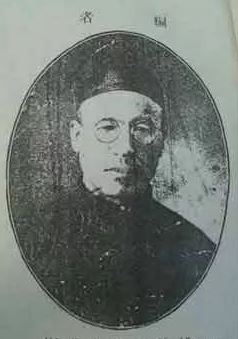
Yao fun chun

Yao Style Traditional Tai Chi Chuan Cultivation Method

Mr. Yao Minglan, styled Fuchun, from Zunhua City, Hebei Province, was a renowned martial artist during the Republic of China era, dedicating his life to martial arts and advocating for the national skill. In 1929, Mr. Yao, together with his fellow disciple Mr. Jiang Rongqiao, co-authored "Lectures on Tai Chi Chuan," which was published in Nanjing and Shanghai in 1930. The book, easily understandable and an excellent teaching material for Tai Chi Chuan, received endorsements and prefaces from Zhang Zhijiang, Li Jinglin, Yu Youren, Zhang Zhankui, and Huang Bainian. Unfortunately, their planned publication of Wang Zongyue's direct lineage of Tai Chi Long Fist (108 forms) did not come to fruition. Nevertheless, Tai Chi Long Fist continues to be passed down in Zunhua, characterized by stretching and bone pulling, encompassing ten major forms including dragon, snake, crane, tiger, horse, chicken, eagle, bear, phoenix, and monkey, with a 20-character secret to its application, offering excellent training effects.

Continue ReadingYao Style Traditional Tai Chi Chuan Cultivation Method
Read more about the article Mr. Li Qiguang’s Notes on Martial Arts Practice Insights
martial secrets

Mr. Li Qiguang’s Notes on Martial Arts Practice Insights

Practicing boxing emphasizes specialization; through specialization comes mastery, and with mastery comes profound insights and endless discoveries. Consistent practice is crucial; seize every moment to practice. Practicing boxing requires concentration; with concentration comes calmness, and from calmness comes vitality. Not only should one remain calm in stillness, but also maintain calmness in motion. Achieving a calm mind is essential; a calm mind leads to a clear spirit, and a clear spirit leads to harmonious energy. The initial focus should be on relaxation and calmness; relaxation brings agility, which allows for smooth circulation of blood and qi; calmness leads to focus, which is essential for delivering powerful strikes. Therefore, relaxation and calmness are key to practicing boxing. The essence of martial arts is nothing but concentrated effort. When learning boxing, one must not be clever or hasty, as this leads to carelessness and superficial understanding, missing the essence. Constant reflection and examination are necessary; where the mind goes, energy follows, and with energy comes strength. Boxing techniques, ultimately, depend on mental agility.

Continue ReadingMr. Li Qiguang’s Notes on Martial Arts Practice Insights
Read more about the article Must Read Yang Yutan’s “Three Principles”/Guan Zhenjun
martial secrets

Must Read Yang Yutan’s “Three Principles”/Guan Zhenjun

Yang Yutan, the martial arts master, was highly respected in the martial arts community. I've heard many stories about Master Yang from my teachers Wang Peisheng, Zheng Shimin, my martial uncles Li Bingci, Weng Fuqi, as well as senior fellow students Gao Zhuangfei and Chen Xingbo. The most memorable aspect to me was his "Three Principles": "Not afraid of criticism regarding martial skills", "Do not argue about martial theory", and "Do not compete for fame and gain". These "Three Principles" were the guiding principles for Master Yang's martial arts practice and personal conduct.

Continue ReadingMust Read Yang Yutan’s “Three Principles”/Guan Zhenjun
Read more about the article Incredible guides Hong Junsheng : Tai Chi Upper, Middle, lower rules
Tai Chi

Incredible guides Hong Junsheng : Tai Chi Upper, Middle, lower rules

The tongue should lie flat against the upper palate, preventing the mouth from drying and excessive saliva production. Some suggest the tongue tip should touch the upper palate, allowing saliva to flow and be swallowed. However, this might interfere with proper breathing during practice. A flat tongue position is recommended.

Continue ReadingIncredible guides Hong Junsheng : Tai Chi Upper, Middle, lower rules