
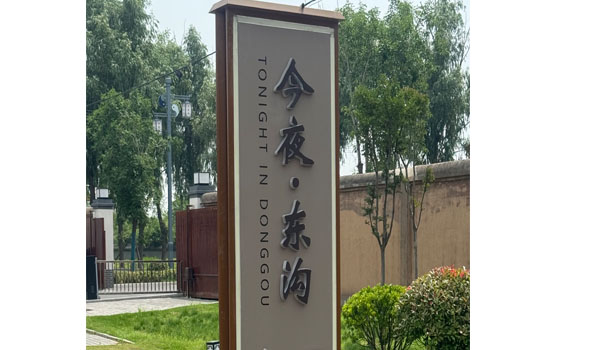
Dong Gou (东沟) is one of the historic areas inside Chenjiagou, Henan, the village closely associated with the origin and development of Chen-style Tai Chi. Local Chenjiagou tourism authorities identify Dong Gou as the traditional place where Chen Wangting created Tai Chi. Today, however, Dong Gou is not simply an old ditch hidden behind the village. It has been rebuilt into a landscaped Tai Chi cultural area, with walking paths, water features, traditional-style buildings, lighting installations, and a nighttime cultural experience.
I went back to Chenjiagou in May 2026, almost a year after my previous visit. The last time I was there, I kept seeing advertisements around the village for a new attraction called “Dong Gou.” There were promises of lights, performances, and a completely redesigned visitor area. Naturally, I wanted to see what had actually been built and whether the new Dong Gou still felt connected to the old Chenjiagou I remembered.
What Is Dong Gou in Chenjiagou?
Dong Gou literally means “East Ditch” or “East Ravine.” It is part of the landscape around Chenjiagou in Wen County, Henan Province. According to the official Chenjiagou scenic-area information, the Dong Gou area stretches for roughly 1.5 kilometers and is more than 10 meters deep in places. It is traditionally associated with Chen Wangting and the early history of Chen-style Tai Chi.
That historical connection is the reason Dong Gou matters. It is not simply another tourist attraction built beside Chen Village. The modern development has been created around a location that already carried importance within local Tai Chi tradition. In recent years, the area has also become part of a larger cultural tourism project designed to introduce visitors to Chenjiagou’s Tai Chi history in a more modern and visual way.
In 2025, Chenjiagou introduced the “Tonight Dong Gou” nighttime experience. The attraction uses lighting, projections, music, and staged visual scenes to present stories connected with Chen Wangting and Tai Chi culture. I visited during the daytime, though, which gave me a very different view of the place.
Returning to Chenjiagou in May 2026
The first thing I noticed when I came back was not the new attraction. It was the heat. May in Henan can already feel like full summer, and that day was hot enough that walking around outside for a long time did not sound especially relaxing. If you are planning to visit Chenjiagou in late spring or summer, bring water and do not underestimate the temperature.
I still remembered roughly where Dong Gou was from my earlier visit, but the area had changed enough that I asked some local villagers for directions. They told us there were several ways into the area. Because visitor access and ticket rules can change, I would not rely too heavily on old advice about where to enter. If you are planning a visit, it is better to check the current visitor information before going. ( but if you do want to save money, listen to old villager is idea way to enter it, )
We decided to go in during the middle of the day.
Finding the New Dong Gou Entrance
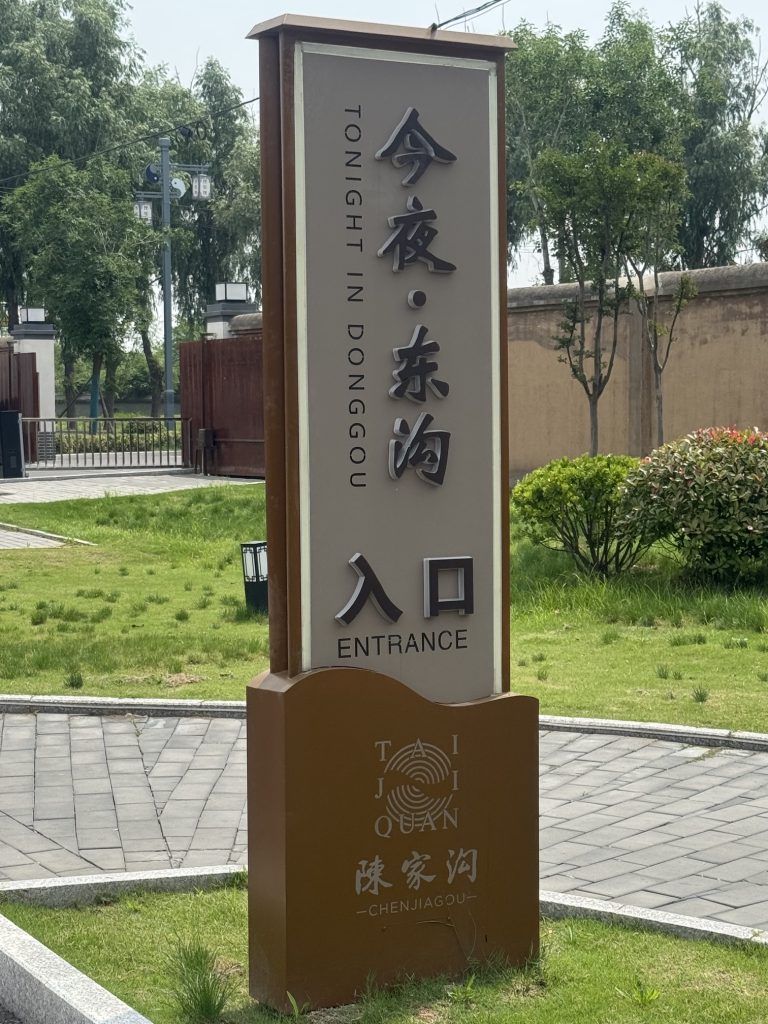
From the main route through Chenjiagou, we continued toward the hills behind the village and then turned left. After roughly 300 meters, we reached the Dong Gou entrance area. There appeared to be two entrances. One looked designed for larger vehicles or buses, while another was more convenient for smaller vehicles and electric bikes.
When my friend and I arrived, the place was almost empty. There was one older man sitting near the entrance. after we hand a cigarette first, We asked if we could go inside, and he simply told us to park our electric bike under a tree. That was it. No line, no crowd, and no noisy tour group. For a newly developed attraction, the quietness was the first thing that surprised me.

A Very Modern First Impression
Once inside, the contrast between old Chenjiagou and the new Dong Gou development became obvious. One of the first things I noticed was a large new parking area with EV charging stations. Everything looked fresh and modern. If you only saw this section, you might think you had arrived at a recently built resort rather than a historic Tai Chi village.
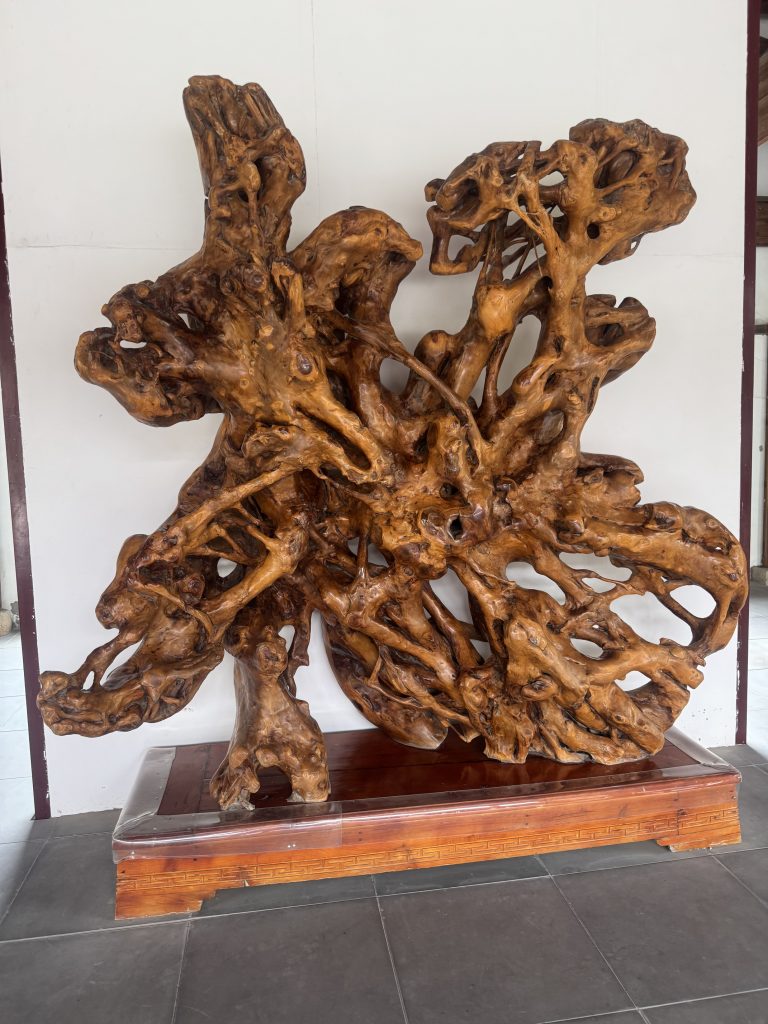
Near the center was a welcome building with decorative root sculptures. The whole entrance area looked carefully planned and clearly involved a serious investment. There were also two large, cute statues near the building that appeared connected with Mixue Bingcheng. They felt completely different from the serious historical atmosphere normally associated with Tai Chi, but somehow they made the entrance feel a little more relaxed.

Old Tai Chi history on one side and cartoon-style commercial branding on the other. Modern China has a funny way of putting those two things together.
Walking Around Dong Gou
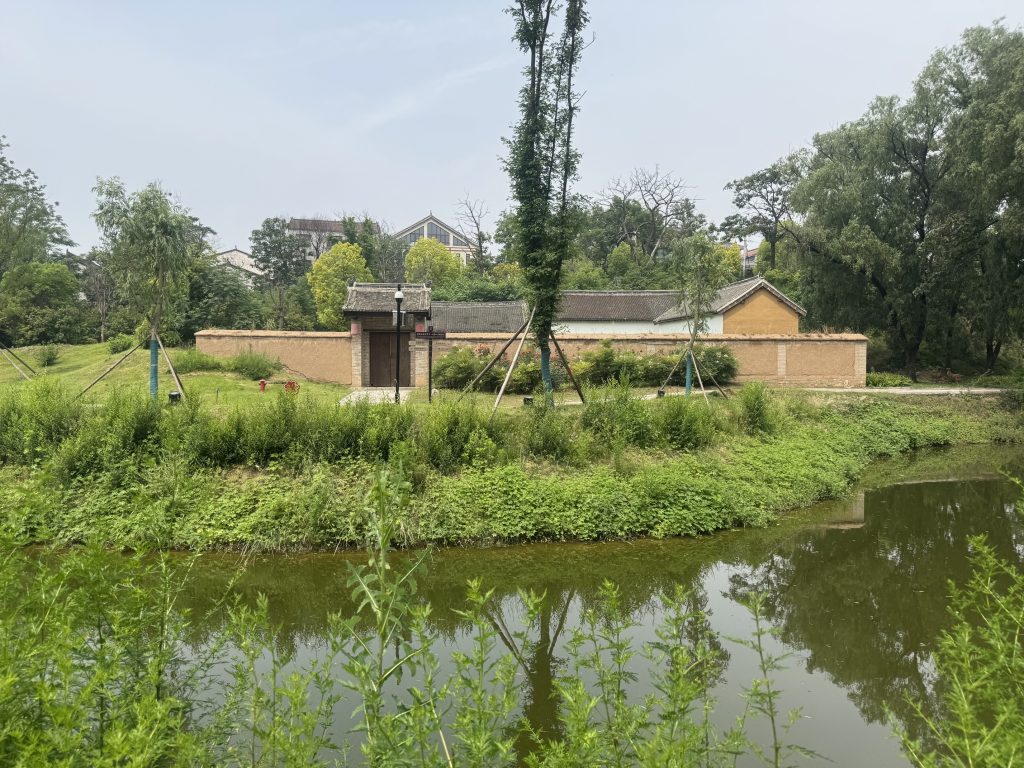
After passing through the main entrance building, we reached a small pond. There were fish in the water, and walking paths curved around the pond and through the low-lying landscape. The area is built around the natural shape of the ditch, so the paths do not feel like a simple flat city park.
In summer, however, there is one thing you will probably notice quickly: mosquitoes. There were plenty of them around the water during my visit. If you come during the warmer months, insect repellent would not be a bad idea.
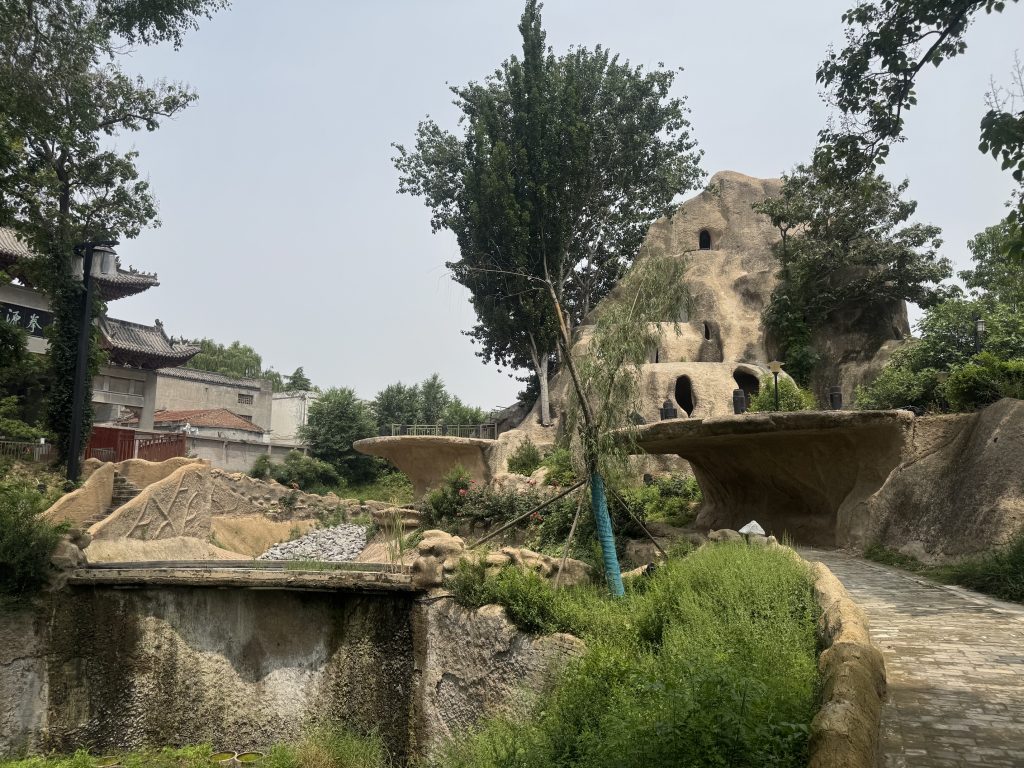
The area itself was extremely quiet. There were many trees, plenty of shade, and very few visitors. Lighting equipment had been installed throughout the landscape, although none of it was operating during the daytime.
What I could hear was music. Soft Tai Chi-style background music played almost continuously while we walked. At first, I could not figure out where it was coming from. Then I noticed speakers hidden beside the paths. Some had been designed to look like rocks, which was a clever touch. You hear the music, but you do not immediately see the equipment producing it.
The New Dong Gou Was Clearly Designed for Night
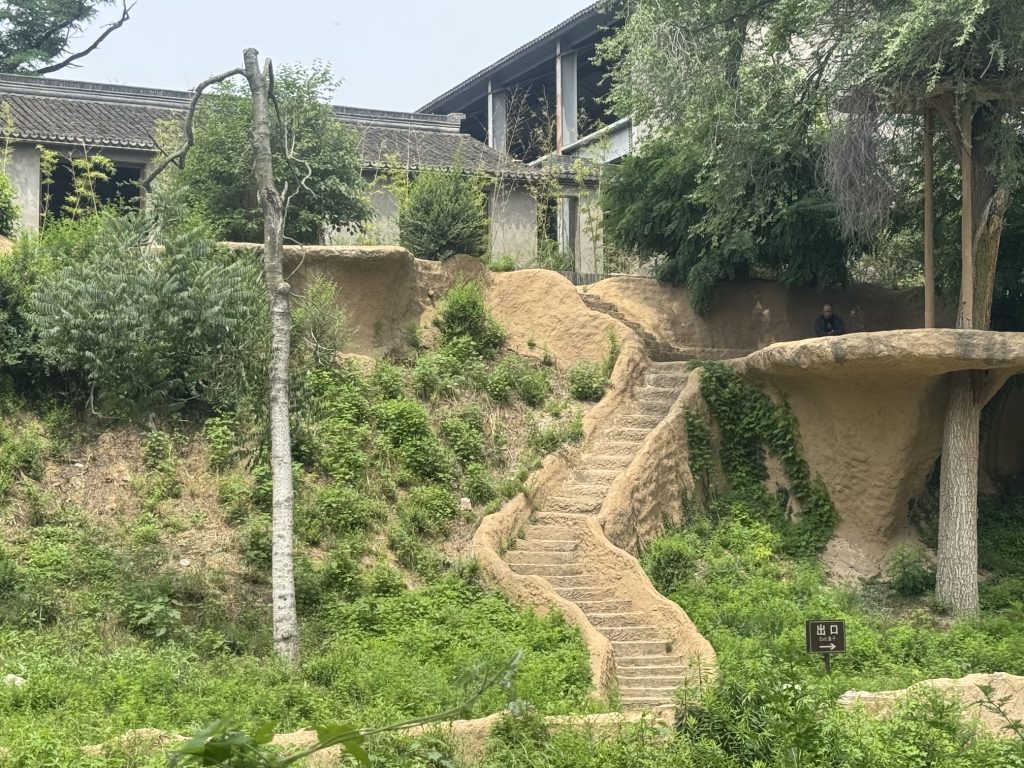
Walking through Dong Gou during the day made one thing obvious: much of the attraction was designed to be experienced after dark. There were lights everywhere. During daylight, they are simply pieces of equipment hidden among the paths, trees, buildings, and artificial landscape. At night, those lights become part of the “Tonight Dong Gou” experience, combining illumination and visual effects with stories from Tai Chi history.
I did not stay for the nighttime show on this visit, so I cannot judge it personally. That distinction matters. During the day, Dong Gou feels more like a very quiet landscaped park built around a historic location. At night, based on the amount of lighting and performance equipment installed throughout the area, it is clearly intended to become something much more theatrical.
Traditional Appearance, Modern Construction
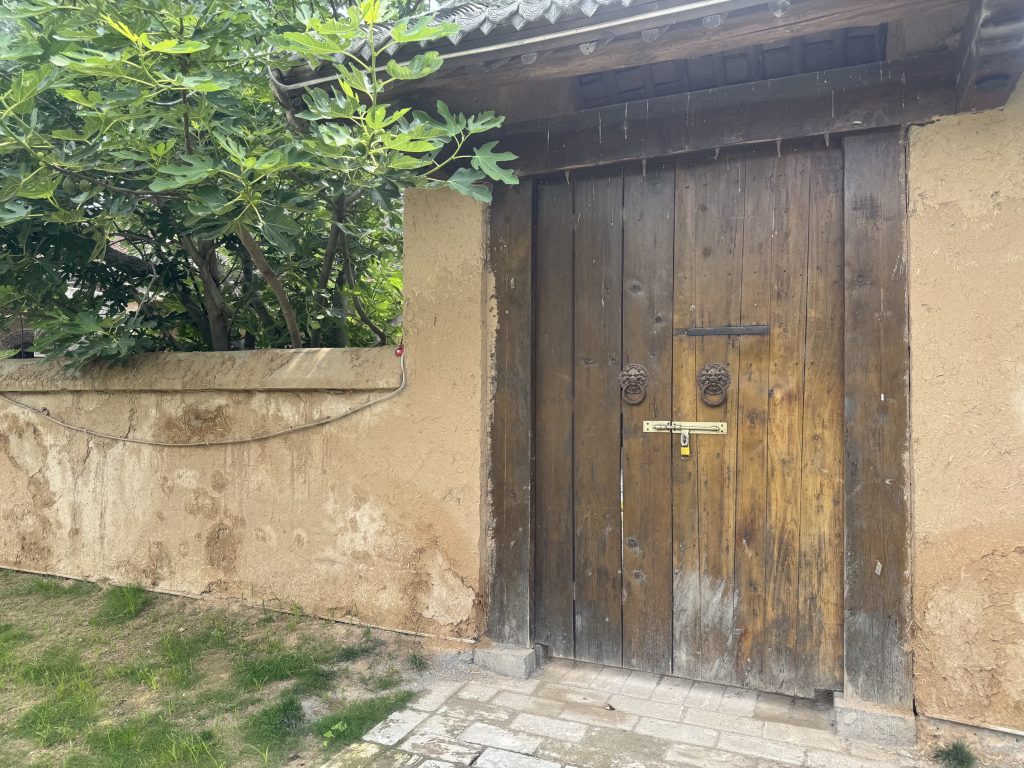
To the left of the pond was another courtyard-style area. From outside, it looked as though it might eventually contain a café, kitchen, or visitor space, although it was locked when I was there. As we continued walking, I began paying more attention to how the new landscape had been constructed.
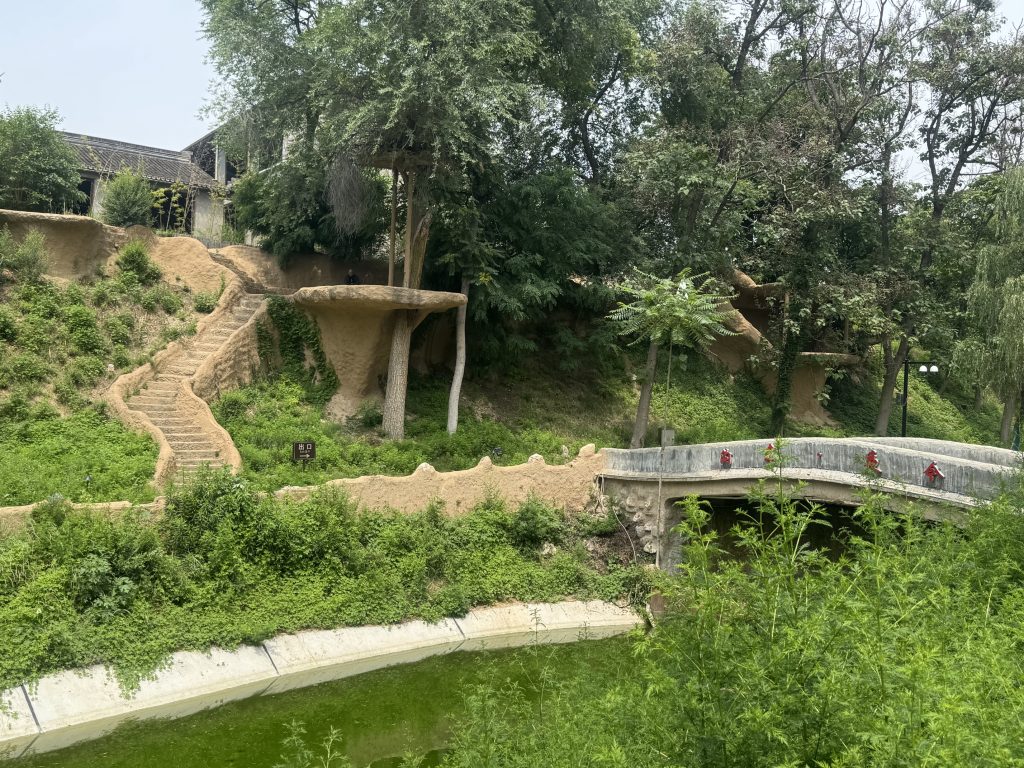
Most of it is modern underneath. You can see places where metal structural elements are hidden inside artificial hills and earth-covered features. The buildings are new, the lighting system is modern, and the visitor infrastructure is clearly recent.
At the same time, the designers made a serious effort to keep the surface appearance traditional. One detail I particularly liked was the brickwork. Some of the paths use old-style bricks that reminded me of the streets and courtyards you might have seen in a Chinese village decades ago.
Whether every brick is genuinely old is less important than the feeling the designers were trying to create. You know the place has been rebuilt, yet certain sections still make you feel as if you are walking into an older version of Chenjiagou. That contrast stayed with me.
Surprisingly Quiet
I expected more people. Maybe it was the heat. Maybe most visitors come at night for the light show. Or perhaps the initial excitement around the newly opened attraction had already settled down. Whatever the reason, during my midday visit there were hardly any people walking around.
Honestly, with all the trees, shade, soft music, and almost nobody nearby, I kept thinking it would be a pretty good place to take a nap. That probably was not the historical insight the designers intended, but it was the truth.
Sometimes travel is like that. You go somewhere expecting a grand cultural experience, and your brain says, “Nice tree. I could sleep here.”
What Dong Gou Felt Like to Me
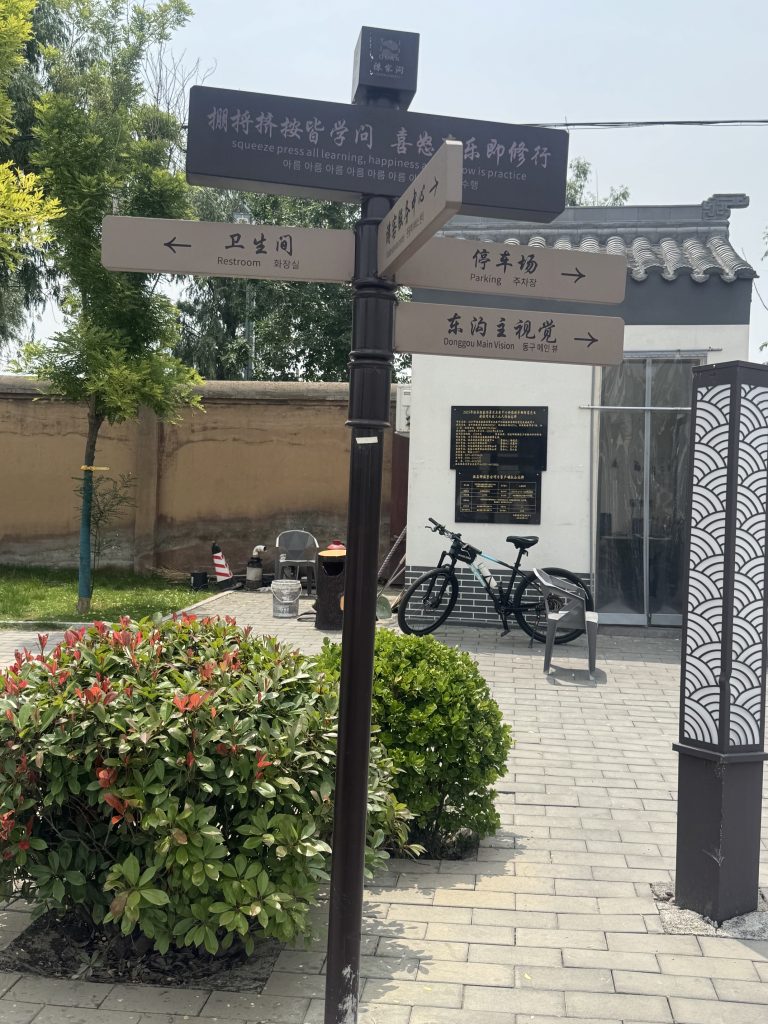
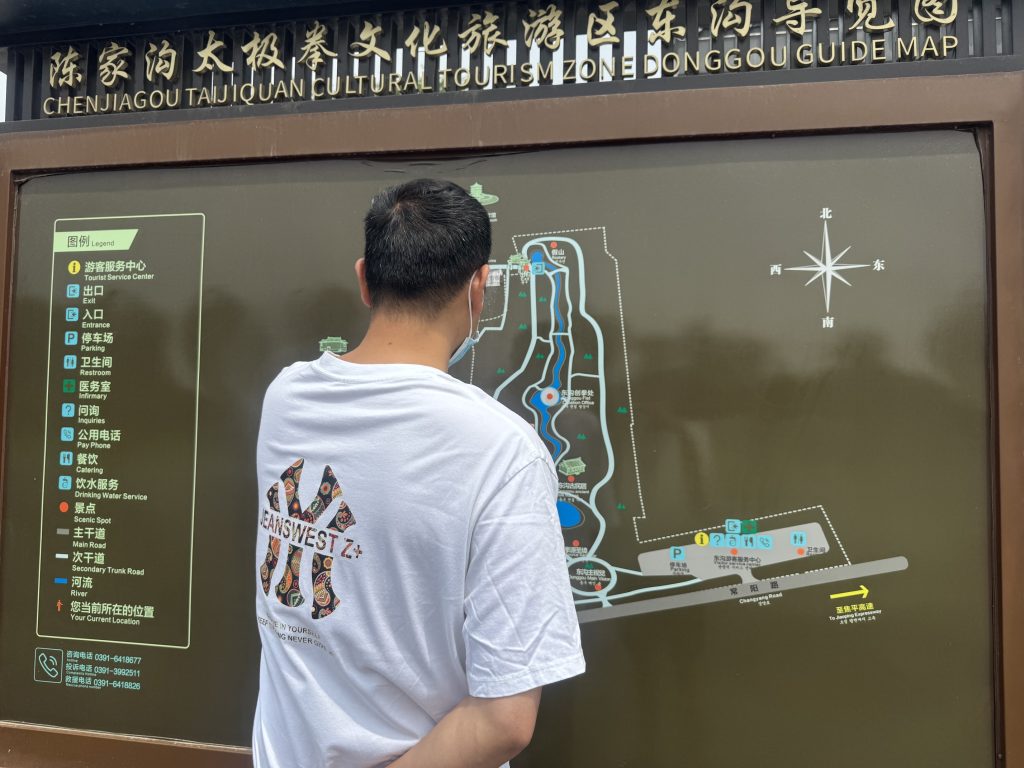
After walking the full loop, I eventually noticed a map near the right side of the entrance. By then, I had already seen most of the area.
My overall impression was positive, although not in the way I expected. Dong Gou does not feel like an untouched historic site, and visitors should understand that before coming. Much of what you see today is newly developed tourism infrastructure built around an older location associated with Chenjiagou’s Tai Chi history.
At the same time, I do not think that automatically makes it fake. The developers clearly tried to create a bridge between old Chenjiagou and modern tourism. New buildings use traditional architectural ideas. Modern speakers are disguised as rocks. New pathways use old-fashioned brick. High-tech lighting is used to tell stories about a martial art with deep historical roots.
Sometimes that combination works better than others, but I understood what they were trying to do.
Is Dong Gou Worth Visiting?
If you are already visiting Chenjiagou because you practice Chen-style Tai Chi or are interested in its history, I think Dong Gou is worth walking through. Do not expect an ancient village frozen in time. Instead, think of it as a modern interpretation of an important place in Chenjiagou’s Tai Chi tradition.
During my May 2026 daytime visit, the area was clean, quiet, shaded, and almost empty. I saw a large new parking area, EV charging stations, a pond, landscaped walking paths, traditional-style buildings, hidden speakers, extensive nighttime lighting equipment, and plenty of trees. The mosquitoes were real too.
If I return again, I would probably visit after sunset so I can compare the daytime experience with the “Tonight Dong Gou” light show. That seems to be when the new attraction is supposed to come alive.
Still, I am glad I saw it during the day first. Without the lights and performance, I could pay more attention to the landscape itself—the ditch, the trees, the paths, the construction, and the strange mixture of old Tai Chi symbolism and very modern Chinese tourism.
Chenjiagou keeps changing. Dong Gou may be one of the clearest examples of that change.
Quick Visitor Notes
Location: Dong Gou (东沟), Chenjiagou, Wen County, Henan, China
My visit: May 2026
Time of visit: Midday
Crowds during my visit: Very light
Weather: Hot
Shade: Plenty of trees
Mosquitoes: Noticeable around the water
Parking: Large modern parking area
EV charging: Available near the entrance during my visit
Night experience: “Tonight Dong Gou,” featuring lighting and immersive Tai Chi-themed displays
Best for: Visitors interested in Chenjiagou, Chen-style Tai Chi history, and the newer cultural tourism development around the village
Frequently Asked Questions
What is Dong Gou in Chenjiagou?
Dong Gou (东沟) is a historic ravine area in Chenjiagou, Henan. Local scenic-area authorities traditionally identify it as a place associated with Chen Wangting and the creation of Tai Chi. Today, it has also been developed as a Tai Chi cultural tourism attraction.
Is Dong Gou an old historic site or a new attraction?
It is both. The location itself has historical and traditional importance, while much of the visitor infrastructure visible today—including buildings, pathways, lighting, parking, and performance equipment—is newly developed.
What is “Tonight Dong Gou”?
“Tonight Dong Gou” is a nighttime cultural experience introduced at Chenjiagou. It uses lighting, projections, music, and other visual effects to present stories connected with Tai Chi and Chen Wangting.
Is Dong Gou crowded?
It was not crowded during my May 2026 midday visit. In fact, it was extremely quiet. Crowd levels may be very different at night, during weekends, holidays, or special performances.
Should I visit Dong Gou during the day or at night?
Daytime is better if you want to see the landscape and walk around quietly. The attraction appears to have been designed especially for nighttime, however, because much of the lighting and immersive presentation is only visible after dark.
