Read more about the article Excellent Reads The Tai Chi Philosophy of My Mentor, Chen Xiaowang / Li Wenkui
Chen Xiaowang

Excellent Reads The Tai Chi Philosophy of My Mentor, Chen Xiaowang / Li Wenkui

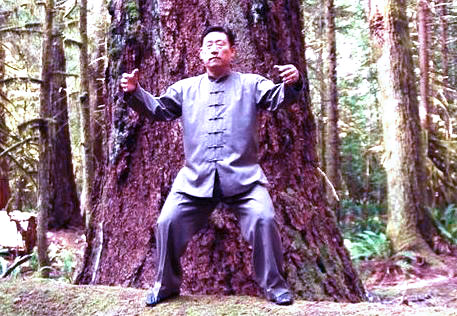
My mentor, Chen Xiaowang, is a renowned Tai Chi master of our times. His mastery of Tai Chi Chuan is intricate and profound, with a unique and deep philosophy. He is also a person of humility and high moral standards. I am fortunate to have received his teachings, which have greatly benefited me. Studying and researching my mentor's views on Tai Chi, whether in relation to the art of Tai Chi itself or to work and life in general, can be immensely beneficial. My own understanding is limited, but I will attempt a preliminary exploration of his perspective on Tai Chi, hoping to enlighten Tai Chi enthusiasts:

Continue ReadingExcellent Reads The Tai Chi Philosophy of My Mentor, Chen Xiaowang / Li Wenkui
Read more about the article The Spiritual Positioning of Traditional Martial Arts Culture in Sanda Combat
San Da

The Spiritual Positioning of Traditional Martial Arts Culture in Sanda Combat

Over the years, the art of bare-handed fighting has been rapidly developing internationally, displaying a vibrant and flourishing trend. Particularly, Western Mixed Martial Arts (MMA), Thai Boxing, and Japan's K-1, with their frequent events, powerful attacks, and shocking promotional effects, have swept the world. Similarly, Chinese martial arts Sanda is also being actively developed just like international combat sports. Whether it's domestic "Sanda King Contests" or Chinese Sanda facing off against American professional boxing, Thai professional Muay Thai, or confrontations with French Free Fight and Japanese Karate, for a time, martial arts competitions between China and abroad were frequent, with victories widely celebrated, truly dazzling and overwhelming to the public. However, a calm analysis of the current state of Chinese martial arts Sanda reveals many deficiencies that need to be improved and perfected.

Continue ReadingThe Spiritual Positioning of Traditional Martial Arts Culture in Sanda Combat
Read more about the article The combat requirements and characteristics of Emei fist / Ren Jiànshè.
Emei Fist

The combat requirements and characteristics of Emei fist / Ren Jiànshè.

Requirements for Techniques: First, techniques should be relaxed, flexible, and devoid of any stiffness. Only by maintaining this state can one remain constantly adaptable and easily neutralize the opponent's force, transitioning from extreme softness to extreme firmness in an instant, thereby maximizing explosive power. Avoid any stiffness or rigidity in techniques. Second, techniques should be delivered elastically. This method allows for maximum speed: when attacking, the strike automatically springs forward, catching the opponent off guard; when retracting, it springs back, making it difficult for them to follow. It also ensures coordination between rapid striking methods and agile footwork, resulting in cohesive and concentrated force.

Continue ReadingThe combat requirements and characteristics of Emei fist / Ren Jiànshè.
Read more about the article Must Read Yang Yutan’s “Three Principles”/Guan Zhenjun
martial secrets

Must Read Yang Yutan’s “Three Principles”/Guan Zhenjun

Yang Yutan, the martial arts master, was highly respected in the martial arts community. I've heard many stories about Master Yang from my teachers Wang Peisheng, Zheng Shimin, my martial uncles Li Bingci, Weng Fuqi, as well as senior fellow students Gao Zhuangfei and Chen Xingbo. The most memorable aspect to me was his "Three Principles": "Not afraid of criticism regarding martial skills", "Do not argue about martial theory", and "Do not compete for fame and gain". These "Three Principles" were the guiding principles for Master Yang's martial arts practice and personal conduct.

Continue ReadingMust Read Yang Yutan’s “Three Principles”/Guan Zhenjun

Inside Interview of Zhuge Jiabao

Mr. Zhuge Jiabao, an early disciple of Mr. Guo Gumin, one of the second-generation leading figures of Liang-style Baguazhang, is highly respected in the Liang-style Baguazhang community for his decades of dedication. One day, while visiting "Wu Soul" magazine, I discussed Mr. Zhuge's situation with the editorial staff, who hoped I could help interview Mr. Zhuge, mainly to understand how the Baguazhang predecessors taught and practiced, and the extent of their skills. I found the topic proposed by "Wu Soul" meaningful for exploring, inheriting, and promoting Chinese traditional martial arts, so I gladly accepted.

Continue ReadingInside Interview of Zhuge Jiabao

Untold Secret Two Auxiliary Methods for Practicing Baguazhang

Indeed, routines like the Eight Major Palms are core to Baguazhang, but many fail to realize that basic exercises are also an essential part of Baguazhang. Like the foundation of a skyscraper, although basic training is slow to show results and time-consuming, if it is solid, the main structure will be stable. Therefore, practicing basic exercises is necessary. Although it may seem tedious at the beginning, with real dedication, one can deeply understand and appreciate the essence, which changes one's perception and understanding: masters of Baguazhang from older generations all emphasize the cultivation of basic skills.

Continue ReadingUntold Secret Two Auxiliary Methods for Practicing Baguazhang

Incredible Tips on Practice Iron Sand Palm

This training session involves combining the six palm attack techniques learned previously for balanced training on both sides. The goal is to master the six palm strike techniques more smoothly and fluently. Start with slow combination training to understand the connection and the principles of exerting force. As proficiency increases, add strength and speed. Once the patterns are mastered, any palm technique can be combined with another, forming a complete attack combination.

Continue ReadingIncredible Tips on Practice Iron Sand Palm